Club Z was the first to break the story about a University of Michigan professor who denied a student a letter of recommendation to study abroad in Israel. View the local, national, and international coverage HERE.
Pittsburgh synagogue shooting shows the horror of anti-Semitism

By Masha Merkulova
The horrific shooting at a Pittsburgh synagogue Saturday, in which 11 people were killed and six people – including four police officers – were injured is a reminder that the cancer of anti-Semitism continues.
The FBI is investigating the shooting as a hate crime. Police said they arrested Robert Bowers in connection with the shooting.
President Trump told reporters at Joint Base Andrews: “It’s a terrible, terrible thing what’s going on with hate in our country and frankly all over the world, and something has to be done.”
The chief executive of the Anti-Defamation League, Jonathan Greenblatt, tweeted: “We are actively engaged with law enforcement to understand the extent of this anti-Semitic attack and we will work together with communities across the country to push back on prejudice wherever it appears.”
Hatred of Jews has been around for thousands of years and knows no geographic boundaries. Historically, Jews in America have been spared the worst of it. In fact, Jews from around the world – myself included – have come to America to escape anti-Semitism.
In 1992, I fled the Soviet Union in pursuit of freedom and a life where I could openly display my Jewish identity.
Today there are anywhere between 500,000 to 750,000 Russian-speaking Jews living in the United States. I can confidently say that none of us who immigrated to the U.S. from Russia and other parts of the former Soviet Union expects to be hiding the fact that we are Jewish.
We did not leave the country of our birth to live in fear and uncertainty. And yet, today in the U.S. we find ourselves in a situation where Jews face open discrimination. The shooting at the Tree of Life Synagogue in Pittsburgh is a painful reminder of the darkest manifestations of anti-Semitism that continue to persist today.
I know about anti-Semitism in America from first-hand experience. How is this possible?
Two instances of anti-Semitism that were reported Sept. 16 made worldwide headlines.
Ari Fuld, a Jew born in New York who immigrated to Israel in 1994 and dedicated his life to fighting injustice, was fatally stabbed by a Palestinian terrorist at a shopping mall in Israel. The 45-year-old father of four, whose life and death exemplified true leadership, paid the ultimate price for being a Jew who wanted to live in his homeland, the state of Israel.
On that same Sunday in America, another display of hate and bigotry was revealed. No one was physically harmed, but it was an incident of anti-Semitism nonetheless.
University of Michigan Associate Professor, John Cheney-Lippold openly discriminated against a Jewish student when he refused to write her a letter of recommendation to study abroad because her chosen destination was Israel.
Cheney-Lippold had earlier told the student he would give her a letter of recommendation but withdrew his support when he realized she wanted to study in Israel, because he supports the boycott, divestment and sanctions movement (BDS) that seeks “to isolate Israel academically, culturally, economically and militarily.”
“As you may know, many university departments have pledged an academic boycott against Israel in support of Palestinians living in Palestine,” Cheney-Lippold wrote the student.
Club Z, the organization that I founded, brought this story to light on our Facebook, Twitter, and Instagram pages. A simple act of posting this professor’s own words on our social media platforms sent a clear message that bigotry and double standard for Israel, the only Jewish state in the world, will not be tolerated in civil society.
My post has since inspired others to come forward with their experiences, as they realize the power of sharing their stories.
Since this original incident, two more episodes of modern-day anti-Semitism have occurred at the University of Michigan.
A student sat through a mandatory class in which the lecturer compared Adolf Hitler, who carried out the mass murder of 6 million Jews, to Israeli Prime Minister Benjamin Netanyahu.
Shortly after, another student was also refused a letter of recommendation to study abroad in Israel by a teaching assistant.
Both students have been vocal, both incidents publicized extensively.
We must encourage and empower every individual who has witnessed or experienced discrimination – whether anti-Semitism, racism or another form of bigotry – to bring it to light.
Today, even in the United States, decades after we left the Soviet Union, our children must screen their university choices through the lens of “how bad is it for Jewish students?”
This is shocking and appalling. This is what propelled the founding of Club Z, based on the principle that we must prepare our children and give them tools to become empowered to face the inevitable – being targeted because of their Jewish identity and connection to Israel – as was the case with University of Michigan student.
Not a week goes by that I don’t hear about university professors who are concerned about openly identifying as Zionist for fear of being punished in their professional lives; or college students who worry about their grades and social lives if they object to their professors’ anti-Israel words and actions; or teens whose teachers are outwardly anti-Israel and anti-Semitic, or whose classmates draw a swastika next to their name.
They ask: “What do you expect me to do? I am just one person.” They are concerned about speaking up. There is, of course, no simple answer.
We must ask: When will be an opportune time to stand up for our dignity? If we do not do it for ourselves now, who will? If we do not show our children how to be proud Jews, what are we teaching them, exactly?
We must find our voice and not allow individuals or organizations to continue to discriminate against us, individually, or as a people. We must use the power of social media to document and report what is happening.
It took one public post on Club Z’s Facebook page to elicit a national response. There are many similar incidents that are swept under the rug. When this happens, we are not able to address the issues that Jewish students and their allies face because of their support for Israel.
It is crucial that this become a public conversation. Otherwise, we cannot progress as a society.
At the very least, relevant organizations should be alerted – such as the Lawfare Project, a legal think tank and litigation fund committed to protecting the civil and human rights of the pro-Israel and Jewish communities.
Professors who inject their personal politics and discriminate against students with a connection to Israel must understand that this will no longer be accepted.
We must speak the truth, no matter the perceived consequences. Silence only perpetuates the current situation in which our children are being attacked in their institutions of learning. The strongest weapon we have is our voice and we must learn to use it.
This is the precise reason why Club Z was founded. Our primary mission is to build a community of educated teens. Our purpose is to foster the idea of responsibility among our teens to stand up for themselves and their community whenever and wherever they are.
As Jews, we are driven by the values of spreading light and repairing the world. Let us spread the light of truth about the state of Israel, root out anti-Semitic actions by academics, and carry on Ari Fuld’s legacy.
And let us all pray that bigotry does not result in any additional violent attacks in America or elsewhere in the world against anyone – Jew, Christian, Muslim, or a person of any other faith.
International Women’s Day: Five advocates for Israel and the Jewish people

3/29/2019
For International Women’s Day, marked annually on March 8, JNS spotlights five women who are unabashed advocates for Israel and the Jewish people.
Masha Merkulova: Advocating by training the next generation
Merkulova is founder and executive director of Club Z, a Zionist youth movement whose mission is to create a network of knowledgeable, articulate and impassioned activists at the high school level who go on to advocate for Israel on college campuses and beyond.
“Standing up for Israel and the Jewish people means understanding who we are and where we come from, and appreciating our rich, collective heritage,” says Russian-born Merkulova. “It is our duty to then help others, including the next generation, see the light of our community and the State of Israel.”
Before starting Club Z, Merkulova spent more than 10 years as a communal activist in the San Francisco Bay Area, spearheading of educational and social events that addressed modern-day campus anti-Semitism.
“Women’s empowerment means harnessing our unique female qualities to empower every person,” says Merkulova. “We should set an example by striving to be the best version of ourselves, every day.”
What’s Happening: Pesach Prep, Sound Bath, ‘Klezmer Xylophone’

4/11/2019
FROM HATRED TO ZIONISM
Arab-Muslim Hussein Aboubakr tells the story of his transformation “From Hatred to Zionism” at American Jewish University. Aboubakr was born into an Egyptian family that taught him anti-Semitism. In school, he was taught that Jews were bloodthirsty Zionists. As he read about Jews and Jewish history, however, Aboubakr changed his mind. Today he is a Zionist. The program is organized by Club Z, a Zionist youth movement; the Israeli-American Council; the World Zionist Organization and JuRashki. 7:30–9:30 p.m. $10. American Jewish University, 15600 Mulholland Drive, Bel Air. Email jenny@clubz.com with questions.
Columbia University student government rejects BDS

3/12/2019
Masha Merkulova, founder and executive director of Club Z, told JNS that being pro-active on campus works.
“Columbia’s students proved once again that when it comes to BDS, being pro-active is what works. Having a strong presence of openly pro-Israel community, and normalizing Zionism as an inseparable part of Jewish identity is what will continue to make a difference on campuses across the country.”
At Wake Forest University, Jewish Students Unite to Defend Their Rights

3/11/2019
by Phillip Yurchenko
Phillip Yurchenko is president of Students Supporting Israel at Wake Forest University, Israel Chair of WFU Hillel, and an alum of Club Z.
The famed Jewish sage Hillel the Elder said, “If I am not for myself, who will be for me?” I was painfully reminded of those words this week as I grappled with antisemitism on my campus, Wake Forest University.
During the Palestinian Rights Awareness Week, organized by the Young Democratic Socialists of America (YDSA), an “apartheid wall” and exhibit were erected with slanderous and antisemitic messages. One section denied the link between anti-Zionism and antisemitism, while another featured the quote “resistance is not terrorism.” The accusations went as far as claiming that Israel practices “ethnic cleansing” and “colonialism.”
Fortunately, we learned about YDSA’s event three weeks ahead of time. Our campus chapter of Students Supporting Israel (SSI) sprang into action, ready to speak out against the delegitimization of Israel on our campus. But we met resistance along the way.
As SSI worked to unite the Jewish community on campus, I sought the guidance of professionals, since our campus Hillel is student run. I reached out to the director of the Jewish Life Office, Dr. Gail Bretan and Hillel International, but my concerns fell on deaf ears. The only advice we received was to lay low throughout the week and not attract too much attention.
Earlier this year, we spearheaded efforts to bring about the Wake Forest student government’s passage of a resolution that recognizes that some criticisms of Israel “can be antisemitic dog-whistles,” and opposes “denying the Jewish people their right to self-determination, and denying Israel the right to exist.” Yet this month, amid preparations for Palestinian Rights Awareness Week, I was told by Dr. Bretan that the very reason antisemitism exists at Wake Forest is the student resolution condemning antisemitism. Imagine my utter disbelief.
Through SSI and the on-campus Hillel chapter, passionate pro-Israel students banded together.
We decided to take matters into our own hands and reach out to YDSA about Palestinian Rights Awareness Week. They assured us their events would promote Palestinian culture, not antisemitism, even when it came to a panel on “antisemitism versus anti-Zionism.” We offered to provide a panel speaker who would represent Jewish students. They claimed it was too late to process our request.
Fast forward to the evening of the panel.
About 45 of us, mostly students and also community members, gathered right before the event. We talked about the rules of Student Conduct to not interrupt, to be cordial. Those of us who made signs knew that we could only be in the back. Some of us used masking tape to cover our mouths, to demonstrate to the speakers that we were being silenced.
As the panel began, we heard misinformation and exaggerations directed not only at Israel, but at us, at me. We were chastised by our own professors for creating a hostile atmosphere on campus, all because we objected to their lies about our homeland. Professor Michaelle Browers went as far as to claim that the Wake Forest Student Government “got swindled” into passing a resolution that adopted a mainstream definition of antisemitism, the very definition that is used by our own State Department and 30 other countries. Professor Barry Tranchtenberg added his opinion, claiming that Jews are white and that stating that Jews are indigenous to the land of Israel is “appropriation … and an attempt to erase the presence of the Palestinian people”.
These professors bemoaned the lack of conversations, when in fact, it was they who refused to have an open dialogue with anyone who disagreed with their assertions. The most disturbing moments of the whole evening for me should have been when a fellow student accused me of being a white supremacist, while I was wearing my very visible kippah on my head; or when another student physically laid his hand on me, in an attempt to intimidate me.
We aimed to create an environment of inclusivity and dialogue, and instead, we were actively excluded from a panel about an issue that affects us as Jewish students on a daily basis.
I’m no stranger to challenging environments for the pro-Israel and Jewish communities. When I was applying to college, I was no different than other Jewish high school students, concerned about anti-Israel activity on my prospective campus. The Jewish Life Office at Wake Forest University assured me that there was no antisemitism on campus. I bought into this fairy tale. Just a few weeks into my freshman year, I realized that the idea of an absence of antisemitism stemmed from the fact that nobody dared speak about Israel.
What did I learn from Palestinian Rights Awareness Week? First, a week that was supposed to be dedicated to discussing how we can help the Palestinian people was plagued with blatant antisemitism. The organizers had no intention of actually discussing the issues that make the lives of Palestinians in the Gaza Strip and the disputed territories difficult. Instead, the one and only old and tired answer they had was, “it’s the Jews!” — of course, nicely masked as “It’s the Israelis.”
Second, we need the Jewish community to support us and empower us. Our voices matter. SSI was fortunate enough to have allies on this issue like the Zionist Organization of America, Hasbara Fellowships, the North Carolina Coalition for Israel, and Voice for Israel — even as we lacked support from Hillel International and the university’s own Jewish Life Office.
Finally, laying low and keeping quiet is never the answer. We maintained open channels of communication with Wake Forest University administration and were ultimately informed by the dean of students that we would be provided with easels on which to place our own posters, which shared a message of truth and dialogue, next to the hateful panels.
We are so grateful to the community at large for not remaining silent. We know that the school received countless emails and phone calls from people across the country asking the administration to do the right thing — don’t allow this amazing institution to fail to acknowledge antisemitism disguised as anti-Zionism, all under the flag of free speech. We all believe in free speech. We never asked the University to shut down the week or the panel. We merely asked to be given a voice, to be allowed to correct the lies and distortions. It’s unfortunate that this did not happen.
It’s time to proactively defend our rights as Jewish and pro-Israel students. While this week was trying, I am proud of my fellow Deacs who stood together and declared clearly and loudly that we will not be silenced. We will not tolerate antisemitism on our campus.
Let’s get invested. Let’s speak up. Let’s unabashedly defend our rights and beliefs.
Anti-Semitic Mural In Los Angeles Defaced After Sparking Outrage From Jewish Groups

3/3/2019
“We are shocked and appalled by this mural in the City of Los Angeles, in front of a community center no less,” Club Z, a platform that helps Jewish teens connect with each other, wrote on its Facebook page. “This image perpetuates the anti-Semitic beliefs that Jews secretly control the government, are the reason for war, and murder children. There is no excuse. We call for the immediate removal of this mural. Share this post to raise awareness.”
Hillel International tells Wake Forest Jewish Students to ‘Lay Low’ During Anti-Israel Week
2/28/2019
‘A duty to listen to Jewish students’
Masha Merkulova, executive director of Club Z, which has helped Yurchenko and his peers through the dilemma, told JNS that “we have a duty to listen to Jewish university students across the country; they are the ones on the ground. In the case of Wake Forest University, students followed what we preach: speak up against anti-Semitism and the delegitimization of Israel on campus.”
“It is extremely disappointing that Hillel International discouraged these students by advising them to lay low and not attract attention to what is happening,” she continued. “That’s unacceptable. We must do better as a Jewish community and act in support of students. I am so proud that these students are standing up for themselves and for the entire Jewish people. These are the kind of leaders we need today.”

Club Z Panel Focuses on Zionism and American Jewry
1/22/2019
Club Z, a Zionist youth organization based in the San Francisco Bay Area, held a panel on January 20 during their Youth Zionist Leadership Forum discussing Zionism and American Jewry.
The panel began with Kasim Hafeez, the founder of The Israel Campaign, who discussed how the biggest challenge facing Diaspora Jews “is the Jewish community” because he thinks there seems to be an attitude of doing nothing in response to anti-Zionism and anti-Semitism because “it could be worse.”
“I’ve never seen that attitude in my life,” Hafeez said.
Hafeez later added that it seems to stem from this “neurosis” about asking “what can I do to stop you from beating me up.”
“It makes no sense,” Hafeez said.
Hafeez said that there are always going to be people who are going to “make you feel bad about who you are” and the way to confront it is to “be proud of who you are” and not view Israel as a “burden.”
Ryan Bellerose, founding member of Canadians United for Israel, recalled how, in downtown Calgary, six Jewish Zionists that he knew were attacked by a crowd of 100 pro-Palestinian protesters for showing support for Israel. Bellerose said that there was initially “absolute silence” from the Jewish community in Calgary over the incident.
He added that four of the pro-Palestinian protesters were arrested and, as a result of Canadian law, their sentence was a fine and to write an essay.
“Beat up some Jews, get some homework,” Bellerose said.
Bellerose singled out the progressive Jewish groups IfNotNow and All That’s Left for trying to “ostracize me out of the Jewish community, which is funny because I’m not Jewish” over his pro-Israel activism.
“The problem with IfNotNow and those groups is that they don’t have a firm Jewish identity,” Bellerose said. “They always talk about ‘my Jewish identity.’ Come on.”
Ran Bar-Yoshefat, the deputy director of the Kohelet Policy Forum think tank, said that the difference between American Jews and Israeli Jews is that American Jews view Judaism as a religion, whereas Israeli Jews view it as a nationality.
“Israelis are particularistics, usually American Jews are very universalistic,” Bar-Yoshefat said, an idea that Israelis take pride in being different while American Jews take pride in being like everybody else.
For instance, Bar-Yoshefat argued that American Jews tend to base Jewish identity “on being a good person,” a trait that he doesn’t think is unique to only Jews. He also doesn’t believe in there being Jewish values and leadership since he thinks that being Jewish is mainly a form of “identity.”
“For me to be Jewish, there has to be other words connected to it,” Bar-Yoshefat said.
He suggested that American Jews need to focus on establishing a Jewish identity among the youth, and that identity should include an unconditional love for Israel, even when there are disagreements in government policy.
When asked about the nature of pro-Palestinian students on college campuses, Hafeez said that such students, who are typically members of organizations like Muslim Students’ Association (MSA) and Students for Justice in Palestine (SJP), will either walk out of his speaking events, ask questions or become “hostile.” Hafeez said he loves it when they become hostile since they typically “get laughed out of the event.”
Bellerose said that the best way to debate anti-Zionists is to “talk about identity” and ask them “what specifically is it about Israel that they hate so much.”
“They usually expose themselves pretty quickly,” Bellerose said.
Club Z Challenges IfNotNow to Debate on Israel
1/10/2019
Club Z has challenged the progressive activist group IfNotNow group to a debate on Israel and the what Club Z says are the “publicity stunts” that IfNotNow uses to advance their agenda.
Club Z Teen Board member Ron Belman and alumni Sam Wolf and Daniel Rutenburg wrote in a letter posted to Twitter on Wednesday that the two organizations have differing viewpoints on what it means to be “pro-Israel.”
“Your organization staged a series of public media stunts to demonize Israel but is conspicuously silent about the country’s right to exist,” the letter states, highlighting IfNotNow’s Birthright walkouts because it “whitewashes the occupation.”
“We are puzzled by these words because know Birthright to be an entirely different experience,” the letter continues. “Those of us who have had the privilege of traveling to Israel with Birthright saw the Jewish state up close – in all of its beauty, complexities, and challenges.”
Belman, Wolf and Rutenberg offered IfNotNow the opportunity to debate them during Club Z’s Youth Zionist Leadership Forum, which takes place in San Francisco on Jan. 18-21.
“We’ll articulate the merits of Birthright and supporting the State of Israel, and you can share your opinion as well,” the trio wrote.
Belman told the Journal in a phone interview that “this is actually the first time that they’ve [IfNotNow] has been challenged in such a way” and he was particularly bothered by IfNotNow’s Birthright walkouts.
“They could have just not gone and not wasted other people’s time,” Belman said, adding the walkouts were than a “publicity stunt to make Israel look evil.”
“If they really do want to have this debate and actually show their side to other Jewish teens that will be at the forum, then they have their right to accept this open invitation,” Belman said.
IfNotNow has not responded to Club Z’s invitation as of publication time. IfNotNow also did not respond to the Journal’s multiple requests for comment as of publication time.
Students from Zionist group challenge ‘IfNotNow’ to debate

1/10/2019
Students Ron Belman, Sam Wolf, and Phillip Yurchenko of the Northern-California-based Zionist group “Club Z” this morning tweeted to Simone Zimmerman, co-founder of the group “IfNotNow,” challenging the group’s leadership to a debate at Club Z’s Youth Zionist Leadership Forum this month (January 18-21, 2019) in San Francisco, CA.
In a signed letter, the students stated that IfNotNow has “staged a series of public media stunts to demonize Israel but is conspicuously silent about the country’s right to exist” and that the organization has helped to organize a walk-off from a Birthright trip.
The students say “those of us who had the privilege of traveling to Israel with Birthright saw the Jewish state up close – in all of its beauty, complexities, and challenges.”
In their letter, Club Z writes: “You describe yourselves as ‘pro-Israel’. We have a different view about what that means.”
“Your organization staged a series of public media stunts to demonize Israel but is conspicuously silent about the country’s right to exist.
“IfNotNow helped to organize a walk-off from a Birthright trip because, in the words of Simone Zimmerman, Birthright is ‘an intentional part of the infrastructure meant to whitewash the occupation and to keep our community indifferent to human rights violations.’ We are puzzled by these words because we know Birthright to be an entirely different experience. Those of us who have had the privilege of traveling to Israel with Birthright saw the Jewish state up close – in all of its beauty, complexities, and challenges.”
The students call the 10-day Birthright trip “one of the greatest gifts that Jewish young adults could ever receive.”
Concluding their letter, Club Z issues their challenge: “Here is your chance. We, the students of Club Z, challenge IfNotNow to a debate at our Youth Zionist Leadership Forum in San Francisco from Jan. 18-21, 2019. We’ll articulate the merits of Birthright and supporting the State of Israel, and you can share your opinion as well.”
Mission District ‘civic engagement’ space met with protests, calls for boycott

1/4/2019
“There’s only one reason that they are protesting a Jewish owner, it’s very clear anti-Semitism,” said a student who gave his name as Philip and identified himself as a member of a Zionist youth organization, Club Z.
More reactions to Pittsburgh Shabbat massacre

10/28/2018
Club Z, Executive Director Masha Merkulova: “Yesterday, a horrific shooting at the Tree of Life Synagogue in Pittsburgh left 11 dead and several others injured. Our prayers go out to the families of the victims, and we wish a speedy recovery for those who were injured. This event moved me to write about the dangers of anti-Semitism that we are witnessing today. And as we were tragically reminded yesterday, these dangers can be fatal. Fox News has featured my op-ed, titled “Pittsburgh synagogue shooting shows the horror of anti-Semitism“, on their homepage.
“In this piece, I write about the Pittsburgh synagogue shooting, the death of Ari Fuld, and the recent incidents at the University of Michigan that include refusals to write letters of recommendation for students seeking to study abroad in Israel. Here is an excerpt: ‘Today in the U.S. we find ourselves in a situation where Jews face open discrimination. The shooting at the Tree of Life Synagogue in Pittsburgh is a painful reminder of the darkest manifestations of anti-Semitism that continue to persist today.’ We grieve with Pittsburgh, and we remain committed to fighting anti-Semitism and hate.”
L.A. Teens at Yom NCSY, Club Z Launch Event
8/10/2018
Israeli-American Council National Chairman Adam Milstein, Jewish Journal Publisher and Editor-in-Chief David Suissa and Club Z Executive Director Masha Merkulova participated in a discussion about Zionism during an evening celebrating the launch of the Los Angeles chapter of Club Z, a Zionist youth movement.
The Aug. 2 event, “Zionism: A Love Story,” was held at the Museum of Tolerance before an audience of about 150 people. The panelists discussed Zionism, their dedication to Israel and engaging tomorrow’s Jewish leaders.
“Club Z is thrilled to be open for business in Los Angeles,” Merkulova said. “We are meeting a critical need for high school students by bringing them together around
their Jewish identity, developing their leadership skills and creating a powerful network of proactive and effective advocates.”
Based in Northern California, Club Z has sought to engage Jewish teenagers whose parents emigrated from the Former Soviet Union, and it is now expanding its programming to other Jewish communities in the United States.
Milstein, an Israeli-American philanthropist, said he is optimistic Club Z will help increase pride for Israel among young people. “Club Z is inspiring the model for the next generation in the Russian Jewish community that is engaged, philanthropic and Zionistic,” he said.
On display at the gathering was an exhibition examining the period leading up to the creation of the State of Israel in 1948, titled “The Birth of Israel: 18 Months That Changed Jewish Destiny.” Attendees also enjoyed a private tour of the museum’s Anne Frank exhibit.
Club Z combats silence in the face of anti-Semitism
6/20/2018
by Masha Merkulova
At Carlmont High School in Belmont, Calif., students were asked to write positive messages in chalk on the pavement, but someone drew a giant swastika underneath the message “Toasted Jew.” What did the school administration do to address this alarming situation on campus? Absolutely nothing.
When it comes to the messages high school students hear about Jews and Israel in the news, on social media and in school, far too many have lost the ability to differentiate between good and evil, and between free speech and hate speech. The result? In many corners of American society, blatant anti-Semitism no longer generates much-deserved public outrage.
Republish this article
Spread the word.
Help JNS grow!
Share now:
FACEBOOK
TWITTER
WHATSAPP
EMAIL
PRINT
(June 20, 2018 / JNS) At Carlmont High School in Belmont, Calif., students were asked to write positive messages in chalk on the pavement, but someone drew a giant swastika underneath the message “Toasted Jew.” What did the school administration do to address this alarming situation on campus? Absolutely nothing.
When it comes to the messages high school students hear about Jews and Israel in the news, on social media and in school, far too many have lost the ability to differentiate between good and evil, and between free speech and hate speech. The result? In many corners of American society, blatant anti-Semitism no longer generates much-deserved public outrage.
Subscribe to The JNS Daily Syndicate by email and never miss our top stories
Your email
The Carlmont incident brought me back to my childhood in the former Soviet Union, where I was indoctrinated with propaganda—some of it anti-Semitic. I grew up under communism, believing in the USSR’s vision for a better, fairer world, free from class struggles.
Later, I learned that this was all doublespeak. It was part of the Soviets’ systematic implementation of bigoted restrictions—like anti-Semitic policies that prevented Jews from attending university, practicing even the most basic parts of our religion or immigrating to our homeland of Israel. But I held on—and still hold on—to the belief that Jews must fight to be treated fairly.
When I came to the Bay Area in the 1990s, I did not expect to find the same sort of anti-Semitism that I encountered in my youth. But as movements that demonize Israel have grown, I have seen the same kind of hateful speech against Jews spread in the United States. I knew that this was a fight I would have to join—that the Jewish people must be empowered to demand the same dignity and rights as all other peoples. I embraced Zionism, and committed myself to spreading justice by promoting and educating people about that movement.
Zionism demands that Jews are seen as worthy of natural rights. It asserts that Jews do not deserve to be treated as second-class citizens, to face pogroms, to be murdered or be hated for being Jewish. Zionism affirms that Jewish people deserve to be free, determining our own fate and future.
Sadly, as I have repeatedly seen, anti-Zionists twist notions of justice and social justice to actively exclude Jews and work against Jewish rights. My experiences in the former Soviet Union made me finely attuned to propaganda. Anti-Zionists are not held accountable to the same standards of humanity and decency they claim to demand, enabling them to reinforce anti-Semitic canards.
This is how anti-Semitic incidents get swept under the rug. In recent years, a wave of hate targeting Jews and Israel on college campuses has generated significant attention, but these kinds of incidents have also become increasingly prevalent in high schools as well. Someone drew a Nazi flag covered in swastikas with the caption “Jews are Evil” at Alameda High School in the East Bay. At Westmont High School in San Jose, somebody drew a swastika in the bathroom next to a Star of David, with the words “f*** them all” written underneath. At Gunn High School in Palo Alto, in an “Introduction to World Religions” class on the first day of school, the teacher introduced Judaism by saying: “Jews didn’t really do anything productive over the course of their existence. They mostly just wandered the desert killing their own babies.”
Anti-Semitism is a unique form of hatred that requires a direct and immediate response, with direct education that specifically addresses anti-Semitism. Our students must learn how to recognize anti-Semitism, whether it is a swastika or a history lesson in which Israel is called an “apartheid state.” We must encourage them to stand up to students who tell anti-Semitic jokes. We need to support them in confronting teachers and authority figures who attempt to erase Israel’s existence or Jewish history.
Young Jews need to learn their people’s history, in addition to the political realities of the present, in order to be prepared to tackle anti-Semitism. They need to be empowered to fight for themselves.
That is why Club Z—the Zionist youth movement I founded—is desperately needed. We equip high school students with the education to become experts on Israel and to serve as effective leaders in their communities, who will ensure that anti-Zionism and anti-Semitism do not get a free pass.
I see the impact on teenagers’ self-confidence each year at the Youth Zionist Leadership Forum, Club Z’s annual national conference. At panels, workshops and social events, they build on the knowledge that they develop at the Club Z Institute, which offers comprehensive and nuanced Israel education, and provides historical context to modern-day headlines. Throughout the year, our student-leadership program, the Club Z Teen Board, empowers students with practical skills and opportunities to direct their passion for Israel and the Jewish community into action. And we continually engage our students after they graduate our program, while providing tactical and financial support for pro-Israel activism throughout their college education.
The Carlmont incident is just one symptom of an age-old disease. The treatment is equipping our students with the knowledge and tools they need to combat anti-Semitism. The time to start cultivating young Zionist leaders is now.
Jewish Women Renaissance Project
Masha Merkulova is a mother of two children, a JWRP sister, a nurse, and the founder and executive director of Club Z, a Bay Area-based organization for teens that fosters a commitment to Israel and Zionism. We spoke to Masha about why she launched Club Z, as well as her tips for preparing kids for anti-Israel sentiments at college.
What inspired you to travel to Israel with the JWRP?
I immigrated to the US from the Former Soviet Union, and I never had a formal Jewish education. Everything I knew was self-taught. When I learned about a last-minute opening on a MOMentum Trip, I didn’t want to miss the opportunity to study with Lori and other JWRP Trip Leaders. I also wanted a holistic Jewish educational experience, where I’d learn alongside Jewish women and then be bonded to them forever. I really believe that when you educate a mother, the entire family can become more Jewishly involved. As a single mother, participating in MOMentum was logistically challenging. But the Partner Organization that hosted my trip was so encouraging that I made it work
How did MOMentum impact you?
The whole experience was one big highlight. I loved having the opportunity to learn more about Jewish values and my heritage. On Shabbat, a wonderful family hosted us in their home, which overlooked the Kotel Plaza, and the atmosphere was so warm. During MOMentum, I realized that Judaism is truly a family. Getting hundreds of Jewish women together — away from the hustle and bustle of their lives — gave us the chance to rediscover the creative parts of ourselves, as well as the compassionate and activist parts.
Meeting such strong women, especially those who created the JWRP, was especially impactful. For a while, I’d felt the need to launch Club Z, and during the trip, I realized that I could do it. I didn’t need to have all of the answers and I didn’t need to be an expert in Judaism or Israel. I just needed the passion and the willingness to learn along my journey.
What need does Club Z fill?
I had spoken to many intelligent and well-educated Jewish college students and learned that they did not know how to respond when people said, “Israel doesn’t have a right to exist” or “You stole my land.” As a nurse, I know that it’s easier to prevent a disease than to cure it, so I started Club Z to prepare kids for the anti-Israel sentiment that they’ll hear on college campuses. At Club Z, we talk about Israel — the tough topics, the controversial topics, and the complicated topics. We don’t give students talking points. Instead, students learn to articulate the real reasons that they care about Israel.
What’s your advice for parents who want to educate their kids about Israel?
Follow Israeli news sources and then make Israel a normal conversation topic in your home. Bring up Israel the same way you’d talk about what’s going on in your kids’ lives or in your country. Also, attend events that share negative viewpoints about Israel or even anti-Israel opinions. Though you may feel uncomfortable to hear these viewpoints, you’ll learn what your children can expect to hear in college. Then, you’ll be able to prepare them and also support them once they’re there. Finally, I invite your teens to attend Club Z’s January conference in Silicon Valley!
Where Heaven Meets Earth
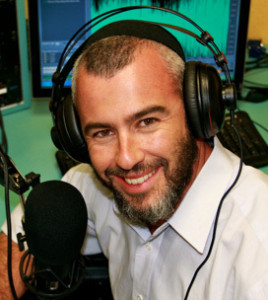
Listen to Yishai Fleisher podcast as he interviews Masha Merkulova, executive director of Club Z and Maria Rutenburg, a supporter and a mom whose 3 teens are proud members and alums.
N. California Conference Prepares High School Students to Combat On-Campus Anti-Semitism, BDS
By JNi.Media 14 Tevet 5777 – January 11, 2017
Club Z, a Zionist youth movement based in northern California that fosters a commitment to Israel and Zionism among teenagers, is holding its “Third Annual High School Conference on Israel and the Middle East” to provide teenagers with an understanding of current events in Israel, tools for advocating for Israel on campus, and knowledge about anti-Israel trends on campuses, so that they could respond effectively. Sixty high school students from all over the US are expected to attend.
The conference will take place on the weekend of January 14-16 at Hayes Mansion in San Jose, CA, and will feature some of the leading voices in pro-Israel activism today: pastor Dumisani Washington; First Nation’s indigenous rights activist Ryan Bellerose; human rights attorney Brooke Goldstein; university professors Tammi Benjamin-Rossman and Naya Lekht; and creative activist Chloe Simone Valdary.
The conference will address, among a wide range of topics, a contemporary history of the Middle East, the Arab-Israeli conflict, anti-Israel groups, and the BDS movement on campus.
“For the majority of Jews across the United States, Zionism is synonymous with justice, human rights, and freedom,” said conference organizer Masha Merkulova. “Yet on college campuses today, Jewish and Zionist students are attacked by anti-Israel students and by faculty trying to paint Israel as racist and oppressive. We’d like to raise the new generation of Jewish leaders who show the world and their fellow students that Zionism is, in fact, the most powerful human rights movement in the modern world.”
Avital Rutenburg, a Club Z member, said: “I look forward to the Club Z conference every year, and there is no place I would rather spend my MLK Weekend. I always leave feeling refreshed, hopeful, more knowledgeable, more confident, more equipped, with new friendships and stronger old ones, with fresh memories.”
Club Z began as a quick study group for a few teens that wanted to arm themselves with accurate information about Israel and the Middle East conflict. Over the years, it has grown into a movement that inspires the participants to connect their identities to Israel.
“At some point, American Jews have to face the fact that while we think we are ‘defending Israel,’ it is the strong and proud State of Israel that has brought about the renaissance of the American Jewish experience,” said Esther Kozakevich, a Club Z alum, currently a student at UC San Diego. “Israel doesn’t need us to ‘speak up’ for her. It is us, Jews living in America, that need to speak up for ourselves, because when Israel is attacked, they are attacking every single one of us. We are one people, with a history and heritage and one future. Club Z has taught me that.”
“Club Z offers a long-term program that does not shy away from the word Zionism, from the truth of our belonging in Israel, from the fact that Jewish rights matter just as much as any other people’s rights,” said the conference organizers in an email to the press. “The education is extensive and academically oriented, and, like anything worth doing it requires a serious effort from participants and their families.”
Keren Moiseev, a Club Z teen whose sister is currently serving in the IDF as a lone soldier summed up her past conference experience, saying: “Club Z conferences always leave me feeling inspired and ready to not only face the anti-Semitism in the world but also fight against it if I’m directly questioned or attacked.”
 Dalia Ziada is an Egyptian award-winning writer, peace activist, and political analyst specializing in governance, geopolitics, and defense policy in the Middle East and the Eastern Mediterranean. She has been globally recognized for her leading role as a civil rights activist in the Arab Spring revolutions of 2010-2011 and for her uncommon stance as an Arab Muslim intellectual in support of Israel’s war against Hamas in 2023.
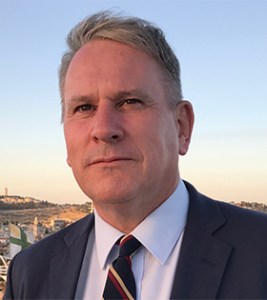 Colonel Richard Kemp was a British infantry commander who spent most of his life combating terrorism and insurgency in Iraq, Afghanistan, the Balkans and Northern Ireland, where he was wounded in a terrorist attack. His name appeared on an Al Qaida kill list in 2013.
 Rawan Osman is a Syrian-Lebanese/German activist advocating for peace with Israel. Rawan previously served on the executive committee at PeaceComms and as a speaker at SharakaNGO. Currently, she is studying Islamic and Jewish Studies at Heidelberg University and is the founder of ArabsAsk. Additionally, Osman serves as the Chairwoman of PostOctober7 e. V.
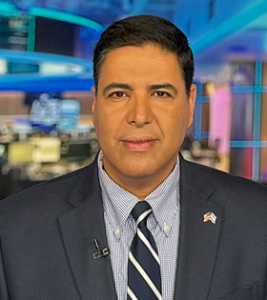 Shahar Azani is a veteran Israeli diplomat, passionate advocate for Israel and a frequent contributor to various media outlets focusing on Israel, Jewish issues and the Middle East.
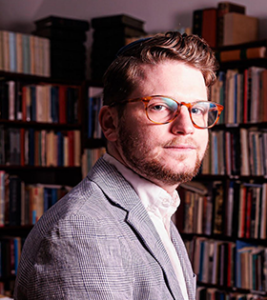 Shabbos Kestenbaum is a student activist and the lead plaintiff against Harvard University, alleging pervasive and systemic antisemitism. He is a regular contributor on national media, has testified in front of the United States Congress multiple times, and lectures internationally on Jewish communal issues.