Written by Kate Fridlin
“I don’t want to get political.” “Can we just go back and talk about other things?” “I’m not old and it’s not affecting me so I don’t care.” These are some of the comments my friends said to me after October 7, 2023 when I brought up Israel. It may be easy for them to brush off conversations about the Israel-Hamas war this past year. I do not have that luxury.
Beyond what’s happening in Israel, there is an increase in anti-Israel activism and related antisemitic incidents. This is important for not only Jews to understand, but the broader community. It’s for this reason that I continue to speak to my friends about what’s going on in Israel and on the streets of our community. Still, they respond “It has nothing to do with me.”
I stand at a distinctive crossroads of compassion and devotion, with my heart dedicated to causes such as #MeToo, breast cancer awareness marches, and pediatric cancer fundraisers. All of them stem from a genuine desire in me to support those in need. However, when it comes to advocating for Israel’s safety, I find myself standing alone, seeking the same sense of togetherness. It has seemed like a betrayal of the communal spirit in which I have engaged, as those close to me rally around causes that connect with them but frequently ignore the urgency of my own.
Generations ago my friends’ family members were not murdered by the Nazis or attacked in pogroms in their villages. They do not see the world from my point of view. How could they? They didn’t grow up with stories of family members who were discriminated against based on their religion, persecuted because of blood libels, kicked out of lands because life was unbearable, or accused of all kinds of sin. My friends don’t even know what it’s like to live in an immigrant household and be a first-generation American.
The sad reality is that today, I have to hide my identity like my great grandparents who vowed to never hide themselves or their children from the antisemitic world. Yet, we live in a world where there are times where safety demands we hide.
As a birthday present, I got a Magen David from my family. It’s one of the most meaningful gifts I’ve gotten. Yet I hide this beautiful Magen David. A beauty the world will not be able to see. No one will see the star shine under the light, how it sits beautifully on my chest, not even the way it connects me to others. Before October 7, 2023, I freely wore my Magen David over my sweater and next to my heart. Now, the necklace hides. It hides within the shadows of society, concealed beneath my sweater.
In these difficult times, it’s hard to ignore the fear, pain and anger that is surrounding us. To all those grappling with the situation in Israel, who feel unsafe and unable to share their thoughts and emotions, my heart goes out to you. I wish I could show the allyship to you that I’d like to find. For what it’s worth, I stand with you.
And to my friends who prefer not to discuss Israel, I want you to know that I haven’t given up on this conversation, and I never will.
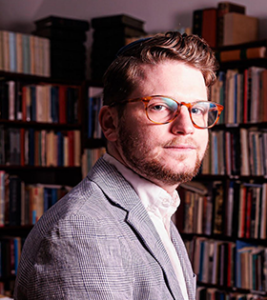 Shabbos Kestenbaum is a student activist and the lead plaintiff against Harvard University, alleging pervasive and systemic antisemitism. He is a regular contributor on national media, has testified in front of the United States Congress multiple times, and lectures internationally on Jewish communal issues.
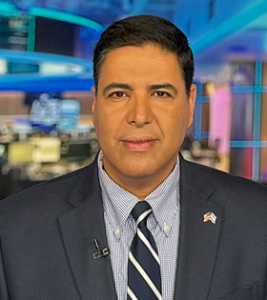 Shahar Azani is a veteran Israeli diplomat, passionate advocate for Israel and a frequent contributor to various media outlets focusing on Israel, Jewish issues and the Middle East.
 Rawan Osman is a Syrian-Lebanese/German activist advocating for peace with Israel. Rawan previously served on the executive committee at PeaceComms and as a speaker at SharakaNGO. Currently, she is studying Islamic and Jewish Studies at Heidelberg University and is the founder of ArabsAsk. Additionally, Osman serves as the Chairwoman of PostOctober7 e. V.
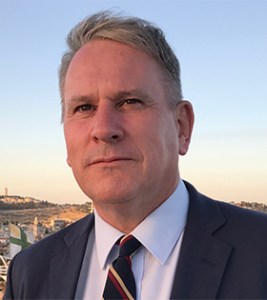 Colonel Richard Kemp was a British infantry commander who spent most of his life combating terrorism and insurgency in Iraq, Afghanistan, the Balkans and Northern Ireland, where he was wounded in a terrorist attack. His name appeared on an Al Qaida kill list in 2013.
 Dalia Ziada is an Egyptian award-winning writer, peace activist, and political analyst specializing in governance, geopolitics, and defense policy in the Middle East and the Eastern Mediterranean. She has been globally recognized for her leading role as a civil rights activist in the Arab Spring revolutions of 2010-2011 and for her uncommon stance as an Arab Muslim intellectual in support of Israel’s war against Hamas in 2023.