My recent articles exposing the fundamental flaws in Jewish education struck a nerve.
The swift backlash from the people it called out reveals exactly why this conversation is necessary.
Critics predictably deflected, insisting that advocating for Israel isn’t the same as advocating for Jews—the very artificial separation that has undermined our youth’s preparedness. Others doubled down, arguing that progressive universalism IS the Jewish purpose, precisely the mindset that has left students defenseless when confronted with antisemitism.
Let’s be crystal clear: Jewish education IS Israel education because Israel embodies Jewish particularism—our unique identity as a people with national aspirations, indigenous rights, and collective self-determination. For decades, this inseparable connection has been deliberately weakened by educators who carved out Israel as a politically charged add-on, while steering “core” Jewish education toward universal values like tikkun olam and social justice. This false separation strips Judaism of its particular character and reduces it to just another universalist ethical system. The result? Generations who can eloquently advocate for every social cause but stand mute when their own people’s rights are challenged. When we teach Passover without emphasizing “Next year in Jerusalem,” or present modern Israel divorced from Jewish peoplehood, we hollow out Jewish identity itself—replacing particularist self-advocacy with an endless quest for external validation.
October 7th brutally exposed the consequences. While Jewish students faced unprecedented hostility, the same educational leaders who had dismissed advocacy training as unnecessary scrambled to provide it—too little, too late, too weak.
The fierce resistance to this critique only confirms its accuracy. Good. Disruption is precisely what’s needed, and Club Z will continue to expose uncomfortable truths regardless of who gets offended.
Our community must reckon with fundamental questions: Can institutional leadership that neglected advocacy skills now develop the vision to correct the course? Look objectively at the results produced by your leaders and institutions. Are your children equipped to defend their identity and heritage? Or are these leaders too comfortable, going through the motions, viewing concerned parents and community members as nuisances rather than stakeholders demanding necessary change?
History suggests transformative shifts are difficult but not impossible. Consider how Theodor Herzl and the early Zionists fundamentally redirected Jewish communal priorities by insisting Jews advocate for themselves rather than relying solely on accommodation. Today’s crisis similarly demands bold recalibration. Those who shaped our current educational approach have a historic opportunity to acknowledge where it has fallen short and help create a framework where advocacy for Jewish rights and identity becomes integral to Jewish education itself—not an afterthought. But this will only happen if we hold them accountable for results, not intentions.
The stakes are too high to entrust this mission to those who demonstrated neither foresight nor adaptability. Until a genuine reassessment occurs, Club Z will continue teaching what others won’t—that advocating for Israel and embracing Jewish sovereignty is not just an educational choice but an essential expression of Jewish identity itself. Our students don’t merely need to understand Israel; they need to embody the confidence, knowledge, and conviction to stand firmly in defense of their people’s rights and history.
This vital work cannot continue without your partnership. As demand for our programs grows exponentially in the wake of October 7th, we face a critical moment of opportunity and responsibility. Your investment today directly builds the confident, knowledgeable Jewish advocates our community urgently needs for tomorrow. Every donation, large or small, expands our capacity to reach more students and deepen our impact at this pivotal time. This is not merely fundraising—it’s community mobilization for Jewish continuity. Join us in ensuring the next generation stands tall, speaks clearly, and advocates effectively.
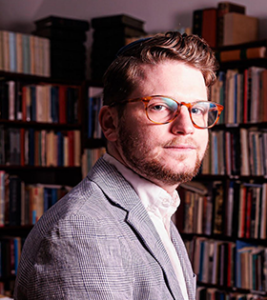 Shabbos Kestenbaum is a student activist and the lead plaintiff against Harvard University, alleging pervasive and systemic antisemitism. He is a regular contributor on national media, has testified in front of the United States Congress multiple times, and lectures internationally on Jewish communal issues.
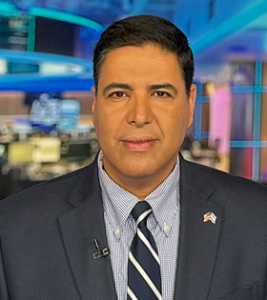 Shahar Azani is a veteran Israeli diplomat, passionate advocate for Israel and a frequent contributor to various media outlets focusing on Israel, Jewish issues and the Middle East.
 Rawan Osman is a Syrian-Lebanese/German activist advocating for peace with Israel. Rawan previously served on the executive committee at PeaceComms and as a speaker at SharakaNGO. Currently, she is studying Islamic and Jewish Studies at Heidelberg University and is the founder of ArabsAsk. Additionally, Osman serves as the Chairwoman of PostOctober7 e. V.
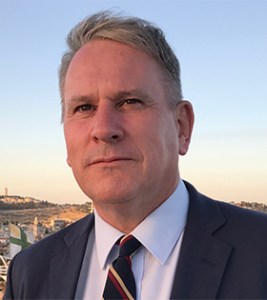 Colonel Richard Kemp was a British infantry commander who spent most of his life combating terrorism and insurgency in Iraq, Afghanistan, the Balkans and Northern Ireland, where he was wounded in a terrorist attack. His name appeared on an Al Qaida kill list in 2013.
 Dalia Ziada is an Egyptian award-winning writer, peace activist, and political analyst specializing in governance, geopolitics, and defense policy in the Middle East and the Eastern Mediterranean. She has been globally recognized for her leading role as a civil rights activist in the Arab Spring revolutions of 2010-2011 and for her uncommon stance as an Arab Muslim intellectual in support of Israel’s war against Hamas in 2023.