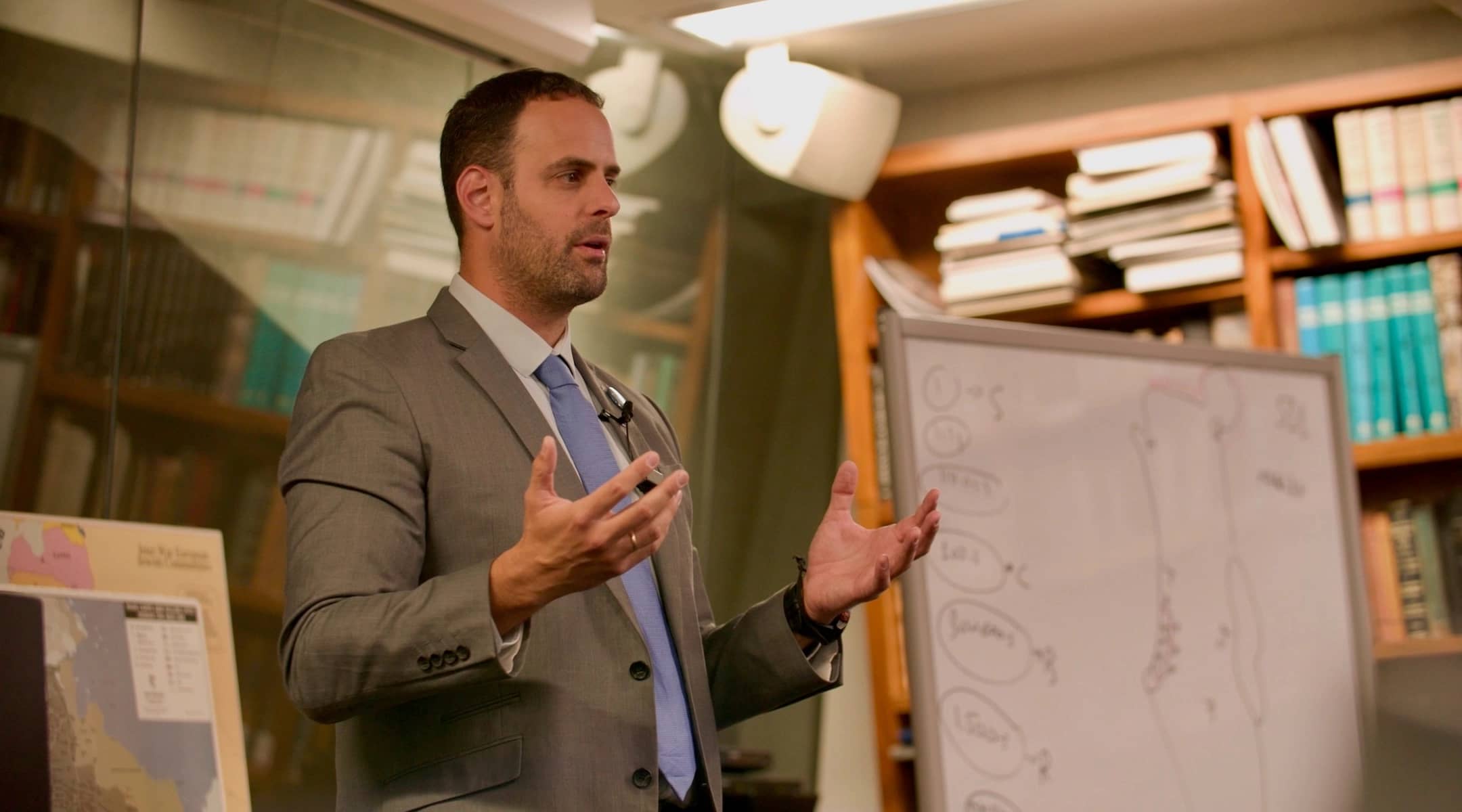
Israeli speaker whose Berkeley event was canceled amid violence draws protest at LA Holocaust Museum speech
LOS ANGELES (JTA) — As a member of the Israeli military who frequently speaks on Israel’s behalf, Ran Bar-Yoshafat is used to being heckled by anti-Israel protesters, especially on college campuses.
But he says what happened to him at the University of California, Berkeley this week — where a planned appearance was canceled because of a protest that turned violent — was on a different level.
“They’re giving [a] prize to the violent side, and basically shutting down the person who wants to speak,” Bar-Yoshafat told the Jewish Telegraphic Agency. “I didn’t get a chance to even say, ‘Hello, my name is Ran.’”
Bar-Yoshafat’s scheduled appearance on Thursday at Los Angeles’ Holocaust museum, three days after the Berkeley incident, took place without interruption — although several dozen protesters amassed outside and later clashed with pro-Israel demonstrators who arrived.
“We are not protesting the Holocaust museum,” one of the leaders of the protest announced over a loudspeaker as the group began its demonstration. “We are protesting an IDF soldier.”
She made sure the group knew Bar-Yoshafat’s name, then led chants that included, “Yoshafat, you can’t hide, you committed genocide.”
Israeli soldiers and former soldiers have faced protests around the world since the outbreak of the Israel-Hamas war, which began when Hamas attacked Israel on Oct. 7. In England, a university rabbi who left to join the reserves faced death threats upon his return. In Canada, a champion athlete had an International Women’s Day speech canceled over her long-ago IDF service. And events featuring IDF soldiers organized by pro-Israel campus organizations have drawn protests at colleges and universities across the United States, including at Georgetown University and SUNY New Paltz this week.
In addition to being a reservist who recently spent 100 days fighting in Gaza, Bar-Yoshafat is an attorney and longtime advocate for Israel who has spoken on its behalf in the United States for decades. (He is also deputy director of the Kohelet Policy Forum, the conservative Jerusalem think tank behind the judicial overhaul that divided Israelis last year.)
So he has had experience facing protests before. He recalled an incident that occurred at the University of California, Davis about 12 years ago, when protesters interrupted a speech he gave. He said the university handled it smoothly and allowed the event to proceed.
“People don’t have to like me,” he said. “They can come and have a walkout, which is, I think, immature, but they’re allowed to do so.”
What happened at Berkeley, he said, was different. There, his talk was derailed after hundreds of pro-Palestinian protesters blocked the venue, smashed windows and, according to some accounts, physically attacked students who had come for the event. The setting for Bar-Yoshafat’s speech had been moved, but the university police decided to evacuate the space at the last minute, saying that they could not guarantee students’ safety. UC Berkeley Police are now investigating the incident.
Bar-Yoshafat said he was “surprised by the magnitude of their violence” and had expected Berkeley to be better prepared with security.
“They physically attacked students, spat on them, verbally attacking and physically assaulting them,” he said. “And the university was punishing me. I didn’t say a word.”
Berkeley, where student activists in the 1960s formed a Free Speech Movement advocating for unconstrained political speech on campus and touching off a wave of student civil disobedience, has seen multiple instances of unrest in recent years over right-wing speakers coming to the school. Protests of far-right provocateur Milo Yiannopoulos in 2017 caused a reported $100,000 in damage, while six people were arrested while protesting a 2019 speech by the commentator Ann Coulter.
Ultimately, Bar-Yoshafat held a small talk at a different location in Berkeley. And on Thursday night, he addressed about 70 people at the L.A. Holocaust museum.
Click here to read the full article
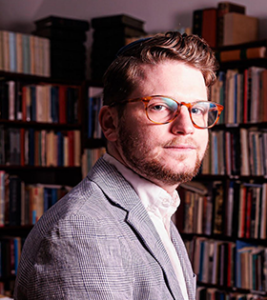 Shabbos Kestenbaum is a student activist and the lead plaintiff against Harvard University, alleging pervasive and systemic antisemitism. He is a regular contributor on national media, has testified in front of the United States Congress multiple times, and lectures internationally on Jewish communal issues.
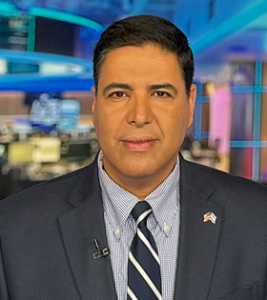 Shahar Azani is a veteran Israeli diplomat, passionate advocate for Israel and a frequent contributor to various media outlets focusing on Israel, Jewish issues and the Middle East.
 Rawan Osman is a Syrian-Lebanese/German activist advocating for peace with Israel. Rawan previously served on the executive committee at PeaceComms and as a speaker at SharakaNGO. Currently, she is studying Islamic and Jewish Studies at Heidelberg University and is the founder of ArabsAsk. Additionally, Osman serves as the Chairwoman of PostOctober7 e. V.
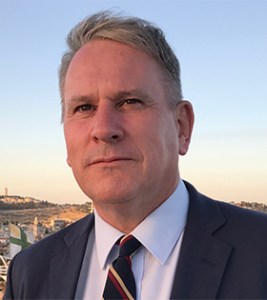 Colonel Richard Kemp was a British infantry commander who spent most of his life combating terrorism and insurgency in Iraq, Afghanistan, the Balkans and Northern Ireland, where he was wounded in a terrorist attack. His name appeared on an Al Qaida kill list in 2013.
 Dalia Ziada is an Egyptian award-winning writer, peace activist, and political analyst specializing in governance, geopolitics, and defense policy in the Middle East and the Eastern Mediterranean. She has been globally recognized for her leading role as a civil rights activist in the Arab Spring revolutions of 2010-2011 and for her uncommon stance as an Arab Muslim intellectual in support of Israel’s war against Hamas in 2023.