Written by Shanna Kayla Melamed
On October 7th, my world shattered. Half asleep, I opened my phone to see headlines about news in Israel. It wasn’t until I attended an event by Club Z (a Jewish youth group I’m active in) that I finally began to grasp the depth of the atrocities that took place. It was shocking for me to learn that October 7 was the single deadliest day for Jews since the Holocaust.
From the beginning, it seemed incomprehensible. How could G-d have allowed for this many lives to be taken, for this much suffering? The details of what I already knew about October 7 became terrifyingly real when I visited the Nova Festival Exhibit in Manhattan. This exhibit was filled with haunting artifacts, videos, pictures and voice recordings. Every wall, holding a piece of someone’s story, before their lives were stolen forever. My world shattered all over again.
As a 15-year-old Jewish Zionist woman, I’ve faced countless antisemitic remarks, having been singled out for the pride I have for my heritage. However, nothing could have prepared me for my shift in perspective after the Nova Exhibit. Since I was a little girl, I always had a connection to Israel. It felt unreal that my land and its people were under attack like never before. Because I have seen videos online and heard the statistics, I thought I could handle the Nova Exhibit. I thought I knew what to expect. My mom warned me of the emotional toll the exhibit would take on me, that it would leave me feeling despair, but she also knew how important it was for me to see it with my own eyes.
Yet nothing could have prepared me for those few hours in the exhibit. My heart broke. My soul ached. I felt numb. Echoing in my ears were the last words of the victims, as they had recorded themselves on their phones. Their belongings lay before me. I saw the festival attendees’ shoes; their jackets; their tents and water bottles. It was like taking a page out of their life, and for some of them it was the last day of their lives.
Videos of terrorists celebrating the bloodshed burned in my mind. As I walked through the rooms, picturing the horrors at the Festival, I was overwhelmed by grief and anger. My friends and I left in silence and despair, forgetting how to form words. Surrounded by names, faces, and belongings that brought these stories to life, the experience reminded me of when I was walking through Yad Vashem or the Mémorial de la Shoah. It was like going through the Hall of Names at Yad Vashem, but added were the victims’ personal belongings, which made the horrors feel more real. It felt personal, like I was mourning the loss of my own siblings—my own family.
The rest of the day, I found myself thinking how lucky I am that I was not one of the three thousand people at the festival.. I felt guilt, knowing I was safe at home while they endured the unimaginable. On the car ride home, my mind was racing with horrid thoughts. I could tell my friends were also shaken up, but tried to hide it as best as they could. I couldn’t handle it all. My emotions were plastered on my face and smeared all over my soul.
When I got home, I went straight to bed, needing to pause this flood of emotions. But sleep wouldn’t come to me. All night, I heard the voices of innocent Israelis, and the laughter of the monsters rejoicing in their deaths. If seeing it affected me this way, I couldn’t begin to imagine what it was like for those who lived through it. I could have been there—I could have been assaulted, taken hostage, or killed. But instead of wallowing, I realized I needed to act. I needed to live, to honor the lives of those lost by carrying their memory forward. From that point forward, I vowed to speak out for my Jewish community, because my brothers and sisters in Israel had their lives cut short; just like my great grandparents’ family’s lives were cut short during the Holocaust.
I felt this was an important turning point in my growing up: learning how to turn grief into a personal call to action. I have since taken matters into my own hands. I have become more active in my community, speaking out against antisemitism and learning how to lead conversations about the Arab-Israeli conflict. My personal message: there is no way to avoid sad and painful moments in life. What matters is what we do with them, and how we force positive change in this world. As the Jewish people, it’s our duty to live fully, to rise above the hatred, and to make this world a better place for everyone. We must tell our stories, share our history, and, even in the face of sorrow, we are called to rise and achieve greatness. Am Yisrael Chai!
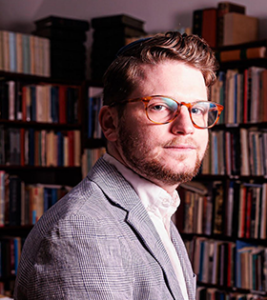 Shabbos Kestenbaum is a student activist and the lead plaintiff against Harvard University, alleging pervasive and systemic antisemitism. He is a regular contributor on national media, has testified in front of the United States Congress multiple times, and lectures internationally on Jewish communal issues.
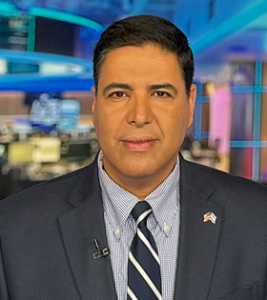 Shahar Azani is a veteran Israeli diplomat, passionate advocate for Israel and a frequent contributor to various media outlets focusing on Israel, Jewish issues and the Middle East.
 Rawan Osman is a Syrian-Lebanese/German activist advocating for peace with Israel. Rawan previously served on the executive committee at PeaceComms and as a speaker at SharakaNGO. Currently, she is studying Islamic and Jewish Studies at Heidelberg University and is the founder of ArabsAsk. Additionally, Osman serves as the Chairwoman of PostOctober7 e. V.
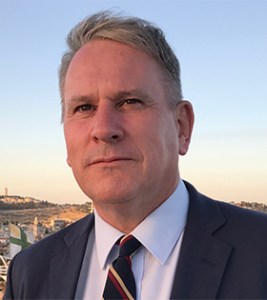 Colonel Richard Kemp was a British infantry commander who spent most of his life combating terrorism and insurgency in Iraq, Afghanistan, the Balkans and Northern Ireland, where he was wounded in a terrorist attack. His name appeared on an Al Qaida kill list in 2013.
 Dalia Ziada is an Egyptian award-winning writer, peace activist, and political analyst specializing in governance, geopolitics, and defense policy in the Middle East and the Eastern Mediterranean. She has been globally recognized for her leading role as a civil rights activist in the Arab Spring revolutions of 2010-2011 and for her uncommon stance as an Arab Muslim intellectual in support of Israel’s war against Hamas in 2023.