Turning Knowledge Into Power by Samantha Kvurt
“Knowledge is Power” is a slogan I have often heard, but never really took to heart. That is, not until the past year. Its relevance to my life has grown simultaneously to my relationship with Israel growing.
Before the last couple of years, I knew of Israel as just a country on a map. As a daughter of Jewish immigrants who escaped Soviet persecution, I grew up proudly Jewish: celebrating Jewish holidays, having close Jewish friends, and wearing a Magen David. I knew that I was Jewish, and I knew that alone held importance. Yet it wasn’t until a friend encouraged me to join a Zionist youth group that Israel became central to my identity.
It was Fall 2022 when I joined Club Z, an organization dedicated to empowering Jewish teens to be proud Zionists and leaders within the Jewish community. I didn’t have any expectations, as it didn’t seem like a big commitment. The group met every other Sunday for 3 hours, during which we had breakfast, discussed current events, recognized the presence of antisemitism in the news and learned different chapters of Israel’s history. I started absorbing all this knowledge about Jewish and Israeli history, yet I felt like it was sitting dormant. I knew the information had a purpose, I just hadn’t had a chance to put it to use. And then October 7th came.
October 7th was a wake-up call for me as it was for many others. That day, my Instagram feed was flooded with horrific videos of Hamas terrorists celebrating the heinous acts they were committing against Israelis. One view after another, little by little chipping away at my heart. I wished that it was just all a nightmare. How could these people have such hatred in their hearts to be committing all these acts in 2023? It just did not make any sense. But while I was shocked at viewing footage of these crimes, I wasn’t prepared for what would follow: people who I knew – classmates, friends, peers – started justifying them.
How could the same people who were my friends indirectly share their strong hatred for the Jewish people so casually? It was so easy for them to repost propaganda images on their social medias about “the genocide committed by the occupation” or the “bombing and killing of innocent Gaza civilians” without having any knowledge about the history or current situation. They were simply doing it due to peer pressure: because it seemed like everyone else was for a “Free Palestine,” and they didn’t even think twice about it. And when I asked them about what they were supporting, all they would say was that “Palestine should be free.” Bizarrely, they offered me what they may have thought was reassurance: “I love Jews, but hate Zionists.” I didn’t know if they were knowingly deceiving me, or they were just that ignorant and naive.
Going to one of the biggest high schools in the country and having to uphold the reputation of being a specialized high school, it truly surprised me to see how little the school does to stop the rapid spread of antisemitism. During a fire drill, a group was holding up posters reading “Look how easy it is to ignore genocide” and “60,000+ innocent Gaza women and children murdered by the illegal occupation.” An average person walking past this group would most likely not question the information they are being fed, and that is where the true issue lies.
There have been endless flyers hung in the stairwells of my school spreading misinformation, an example being one that read “No matter who you are or where you’re from, the colonization and genocide of Palestinian people affects all of us. You don’t need to be an expert to understand why we need a free Palestine.” These posters are targeted towards students who have no knowledge about the conflict nor the history of the land that is supposedly being “colonized”. Yet, the school sat back and allowed it to happen.
It felt like a slap to the face, and a strong jolt to reality when I was truly able to see for myself how deep Israel hatred had infected and spread to the same people I trusted and thought knew better. I continued asking basic questions of my misguided peers. I challenged their slogans and warped views of Israel. Not only was my engagement with my peers not changing their minds, it seemed to further enrage them. Yet my failed outreach wasn’t a failure at all. My outreach to my peers wouldn’t have happened without the knowledge and confidence I gained from my Club Z experience. Both the lessons and the relationships I formed with fellow Jewish teens brought me out of my shell, and to a place where I felt comfortable being vocal on Israel, in other words – an activist.
It also provided a supportive space where I could share these terrible experiences and discuss the best ways to engage others. Throughout the past year, I was frequently exposed to a slogan shared by Israel haters, and discussed during my Sundays at Club Z: “History didn’t start October 7.” I agree. The history of the war against Israel goes back to even before 1948, when Israel’s neighbors waged a war against it they’re still fighting today. I’m grateful to have not just learned this history, but also how to discuss it.
There will never be a point where you have enough knowledge to change everyone’s mind. Still, there is value in acquiring the knowledge itself. And there will always be opportunities to use that knowledge to move people who are willing to be moved. The search for knowledge is never done. Every Jew is on the front lines whether they realize it or not. But fighting for what I believe in, and for the Jewish people as a whole, gives my life purpose as it should for every Jew. The Jewish people are more unified now than ever. Fighting for what we believe in and fighting for the rights we are born with will help keep us grounded, not taking for granted our ancestors’ struggles. I’ve only just begun this journey, and I expect to keep fighting and keep learning with Club Z by my side.

Wearing our Jewishness with Pride
Written by Emily Magalnik
When my parents immigrated to the United States in 1991, they carried with them a deep and enduring dream. They envisioned a life for their children where they would be able to express their Jewish pride and identity freely without any fear, unlike their upbringing. When my parents were growing up in the Soviet Union they weren't allowed to learn or practice their Judaism, let alone express their Jewish pride. They never had the privilege to have their Bat or Bar Mitzvahs and didn't get to celebrate any of the Jewish holidays.
My parents chose to settle in Five Towns, Long Island, a place where they felt their children would receive a great education surrounded by a warm Jewish community; a place where we would proudly wear our Magen Davids, Hamsa necklaces and red strings That is how my brother and I lived, and my parents greatly valued this.
Come October 7th, 2023, our whole world changed forever. That feeling of comfort and tranquility that my family has had for the past 15 years. Gone. In that moment it didn't feel like it was 2023. For at least a moment, it felt as if I was seeing the world through the eyes of my great grandparents who lived through the pogroms of Soviet Russia.
For the first time ever I didn’t feel safe in my own environment. I still remember the day as if it was yesterday. I was in Brooklyn staying over at my grandma's house. It was around 11:45 PM on October 6th and I was just laying in my bed scrolling through TikTok and I came across this one live stream that showed a building that had collapsed with fire burning all around it. At first I didn't think much of it but once I heard the man recording the livestream yell the words “Allahu Akbar” I knew something was seriously wrong. I knew that Israel was under attack. Without any hesitation I ran straight to Google and searched “Israel live updates.” My heart immediately dropped. I felt sick to my stomach. The news headlines said that Hamas had attacked southern Israel, and specifically the Nova Festival: a music festival celebrating life.
An hour passed, and I couldn't sleep. I was restless, terrified - not just for the people at the music festival, but for everyone living in the Jewish homeland of Israel.
I was able to get about 4 hours of sleep that night. I had specifically set an alarm for 8 am so I could call my other grandma to inform her about all of the horrendous things that are happening in Israel.
When she finally picked up the phone, I didn't even have a chance to speak. I could already hear the Russian news playing in the background along with my grandfather's furious voice shouting at the television with such anger. I immediately asked, “Is our family okay?” and my grandma responded with, “We haven't heard from them yet, but G-D willing everyone is okay.” Even though this was not a very comforting answer, I decided to move on with my day and just wait until I could gather more information.
Fast forward five days. Rumors were going around that tomorrow Friday the 13th, there would be “fake rabbis” coming to our neighborhood and assaulting Jewish members of the community. When I first told my parents about this they thought it was a joke, but once they started seeing this news in community group chats and on social media, their fears were confirmed. We all went to sleep that night assuming the next day would be like any other.. I woke up the next morning at 6:30 AM very confused as to why nobody was awake and getting ready for the day. My mom told me “Emily, go back to sleep, it's not safe for you to go to school today.” I decided not to question it since I knew what was happening, and I also trusted my parents.
As the day went on, I only heard about maybe one or two of these “fake rabbi” situations. I was still really worried so I decided to stay in my house until I got the confirmation that it was finally safe to go outside. I remember constantly checking my front door because of how paranoid I was.
Just as I had assumed, we never got that confirmation, but we had to move on. The next day, I went back to Brooklyn to stay at my grandparents’ house again because I was attending a Jewish youth group the next day.
From the moment that I entered my grandma's house I felt a different vibe. She immediately told me that if I was going anywhere that I should hide my Magen David and my red string that I have on my wrist. This made me feel a new level of low that I have never felt before. Never in my life have I been told to hide my Jewish identity. Even when my family and I were crossing the border from Israel into Jordan (technically at peace with Israel, but can be a hostile environment), they told me to keep my Magen David on and to wear it proudly. So when I was told to hide it while walking outside in New York, it truly broke my heart.
I listened to my grandmother and the rest of my family for about a month or so, hiding my Magen David and red string, and then I got fed up. I thought to myself, “Why should I care what other people think?” To this day, I wear them proudly.
What has helped me overcome this fear and show my Jewish pride are the experiences I’ve had with Jewish youth organizations, such as Cteen, SSI (Students Supporting Israel) and JSU/NCSY. One stands out: Club Z, which is a Zionist youth organization dedicated to empowering teens to become leaders in their community through education and Jewish pride.
I’m grateful that throughout these experiences I was also becoming a part of the Club Z community: learning the deep history of the Jewish people, modern Israel and how to educate others. This experience reinforced the importance of Jews showing their pride, and having a strong and supportive Jewish community. The kind my parents have always wanted for me, and one that they have never given up on.
Am Israel Chai.
Standing Together
Written by Kate Fridlin
“I don’t want to get political.” “Can we just go back and talk about other things?” “I’m not old and it’s not affecting me so I don’t care.” These are some of the comments my friends said to me after October 7, 2023 when I brought up Israel. It may be easy for them to brush off conversations about the Israel-Hamas war this past year. I do not have that luxury.
Beyond what’s happening in Israel, there is an increase in anti-Israel activism and related antisemitic incidents. This is important for not only Jews to understand, but the broader community. It’s for this reason that I continue to speak to my friends about what’s going on in Israel and on the streets of our community. Still, they respond “It has nothing to do with me.”
I stand at a distinctive crossroads of compassion and devotion, with my heart dedicated to causes such as #MeToo, breast cancer awareness marches, and pediatric cancer fundraisers. All of them stem from a genuine desire in me to support those in need. However, when it comes to advocating for Israel's safety, I find myself standing alone, seeking the same sense of togetherness. It has seemed like a betrayal of the communal spirit in which I have engaged, as those close to me rally around causes that connect with them but frequently ignore the urgency of my own.
Generations ago my friends’ family members were not murdered by the Nazis or attacked in pogroms in their villages. They do not see the world from my point of view. How could they? They didn’t grow up with stories of family members who were discriminated against based on their religion, persecuted because of blood libels, kicked out of lands because life was unbearable, or accused of all kinds of sin. My friends don’t even know what it’s like to live in an immigrant household and be a first-generation American.
The sad reality is that today, I have to hide my identity like my great grandparents who vowed to never hide themselves or their children from the antisemitic world. Yet, we live in a world where there are times where safety demands we hide.
As a birthday present, I got a Magen David from my family. It’s one of the most meaningful gifts I’ve gotten. Yet I hide this beautiful Magen David. A beauty the world will not be able to see. No one will see the star shine under the light, how it sits beautifully on my chest, not even the way it connects me to others. Before October 7, 2023, I freely wore my Magen David over my sweater and next to my heart. Now, the necklace hides. It hides within the shadows of society, concealed beneath my sweater.
In these difficult times, it’s hard to ignore the fear, pain and anger that is surrounding us. To all those grappling with the situation in Israel, who feel unsafe and unable to share their thoughts and emotions, my heart goes out to you. I wish I could show the allyship to you that I’d like to find. For what it’s worth, I stand with you.
And to my friends who prefer not to discuss Israel, I want you to know that I haven’t given up on this conversation, and I never will.
Growing Up
Written by Shanna Kayla Melamed
On October 7th, my world shattered. Half asleep, I opened my phone to see headlines about news in Israel. It wasn’t until I attended an event by Club Z (a Jewish youth group I’m active in) that I finally began to grasp the depth of the atrocities that took place. It was shocking for me to learn that October 7 was the single deadliest day for Jews since the Holocaust.
From the beginning, it seemed incomprehensible. How could G-d have allowed for this many lives to be taken, for this much suffering? The details of what I already knew about October 7 became terrifyingly real when I visited the Nova Festival Exhibit in Manhattan. This exhibit was filled with haunting artifacts, videos, pictures and voice recordings. Every wall, holding a piece of someone’s story, before their lives were stolen forever. My world shattered all over again.
As a 15-year-old Jewish Zionist woman, I’ve faced countless antisemitic remarks, having been singled out for the pride I have for my heritage. However, nothing could have prepared me for my shift in perspective after the Nova Exhibit. Since I was a little girl, I always had a connection to Israel. It felt unreal that my land and its people were under attack like never before. Because I have seen videos online and heard the statistics, I thought I could handle the Nova Exhibit. I thought I knew what to expect. My mom warned me of the emotional toll the exhibit would take on me, that it would leave me feeling despair, but she also knew how important it was for me to see it with my own eyes.
Yet nothing could have prepared me for those few hours in the exhibit. My heart broke. My soul ached. I felt numb. Echoing in my ears were the last words of the victims, as they had recorded themselves on their phones. Their belongings lay before me. I saw the festival attendees’ shoes; their jackets; their tents and water bottles. It was like taking a page out of their life, and for some of them it was the last day of their lives.
Videos of terrorists celebrating the bloodshed burned in my mind. As I walked through the rooms, picturing the horrors at the Festival, I was overwhelmed by grief and anger. My friends and I left in silence and despair, forgetting how to form words. Surrounded by names, faces, and belongings that brought these stories to life, the experience reminded me of when I was walking through Yad Vashem or the Mémorial de la Shoah. It was like going through the Hall of Names at Yad Vashem, but added were the victims’ personal belongings, which made the horrors feel more real. It felt personal, like I was mourning the loss of my own siblings—my own family.
The rest of the day, I found myself thinking how lucky I am that I was not one of the three thousand people at the festival.. I felt guilt, knowing I was safe at home while they endured the unimaginable. On the car ride home, my mind was racing with horrid thoughts. I could tell my friends were also shaken up, but tried to hide it as best as they could. I couldn’t handle it all. My emotions were plastered on my face and smeared all over my soul.
When I got home, I went straight to bed, needing to pause this flood of emotions. But sleep wouldn’t come to me. All night, I heard the voices of innocent Israelis, and the laughter of the monsters rejoicing in their deaths. If seeing it affected me this way, I couldn’t begin to imagine what it was like for those who lived through it. I could have been there—I could have been assaulted, taken hostage, or killed. But instead of wallowing, I realized I needed to act. I needed to live, to honor the lives of those lost by carrying their memory forward. From that point forward, I vowed to speak out for my Jewish community, because my brothers and sisters in Israel had their lives cut short; just like my great grandparents' family's lives were cut short during the Holocaust.
I felt this was an important turning point in my growing up: learning how to turn grief into a personal call to action. I have since taken matters into my own hands. I have become more active in my community, speaking out against antisemitism and learning how to lead conversations about the Arab-Israeli conflict. My personal message: there is no way to avoid sad and painful moments in life. What matters is what we do with them, and how we force positive change in this world. As the Jewish people, it’s our duty to live fully, to rise above the hatred, and to make this world a better place for everyone. We must tell our stories, share our history, and, even in the face of sorrow, we are called to rise and achieve greatness. Am Yisrael Chai!
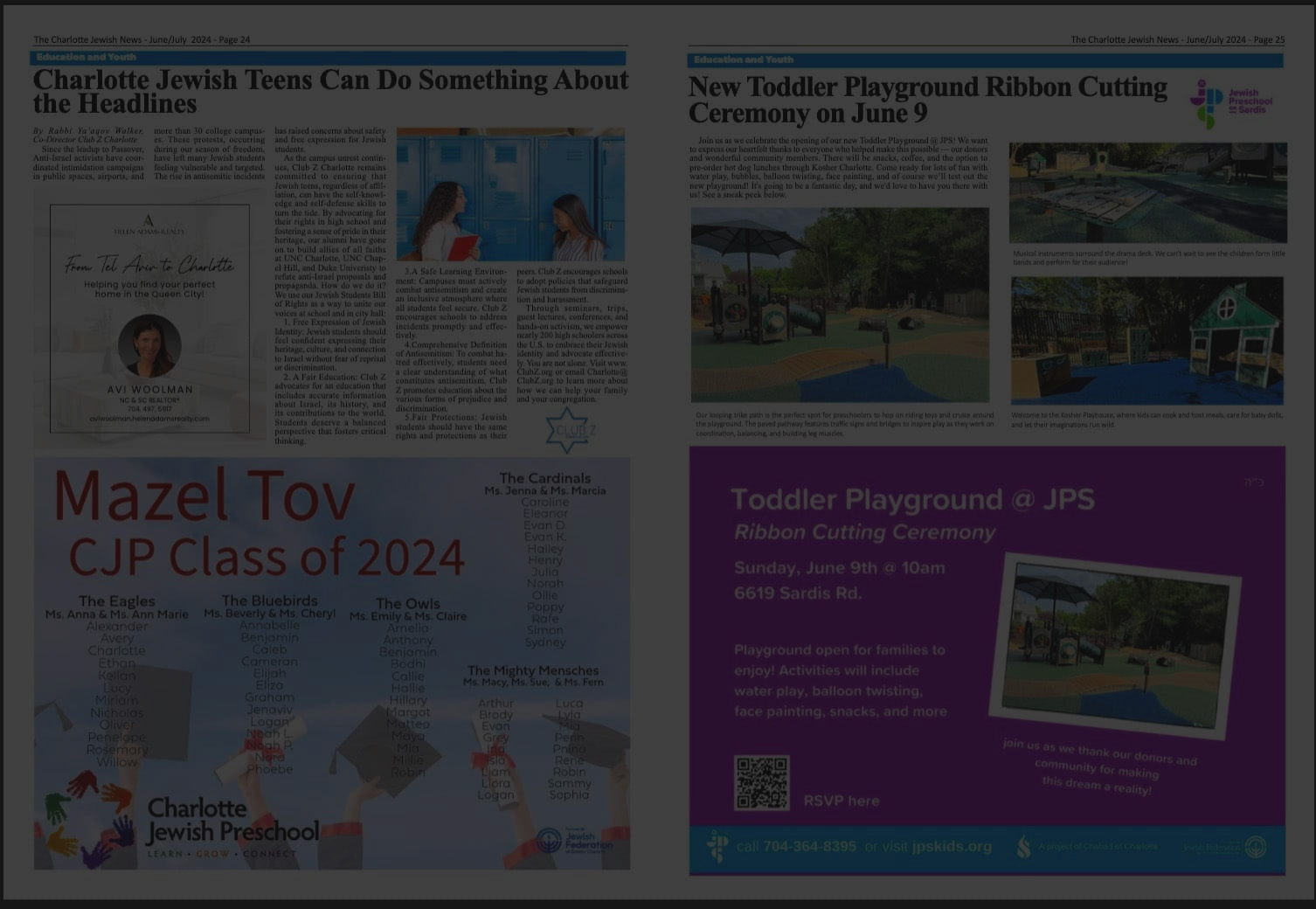
Charlotte Jewish News June 2024
The Charlotte Jewish News is a monthly (except July) publication dedicated to informing, representing, and engaging the Greater Charlotte Jewish community. The CJN reports on news and upcoming events of the local Jewish agencies, accomplishments of the members of the local Jewish community, and stories about Jewish holidays and events in Charlotte, the U.S., and Israel. The CJN is affiliated with the Jewish Federation of Greater Charlotte and operates as a nonprofit organization under the Federation’s 501(c)(3)
Click here to read the full article

Pro-Israel organizations hold ‘Bring Them Home’ rally on Abele Quad, draw pro-Palestinian protesters
Per a Thursday email from Student Affairs, the pro-Palestinian protest was a “non-registered event that included outside individuals who were not approved to be on campus” and is currently under investigation.
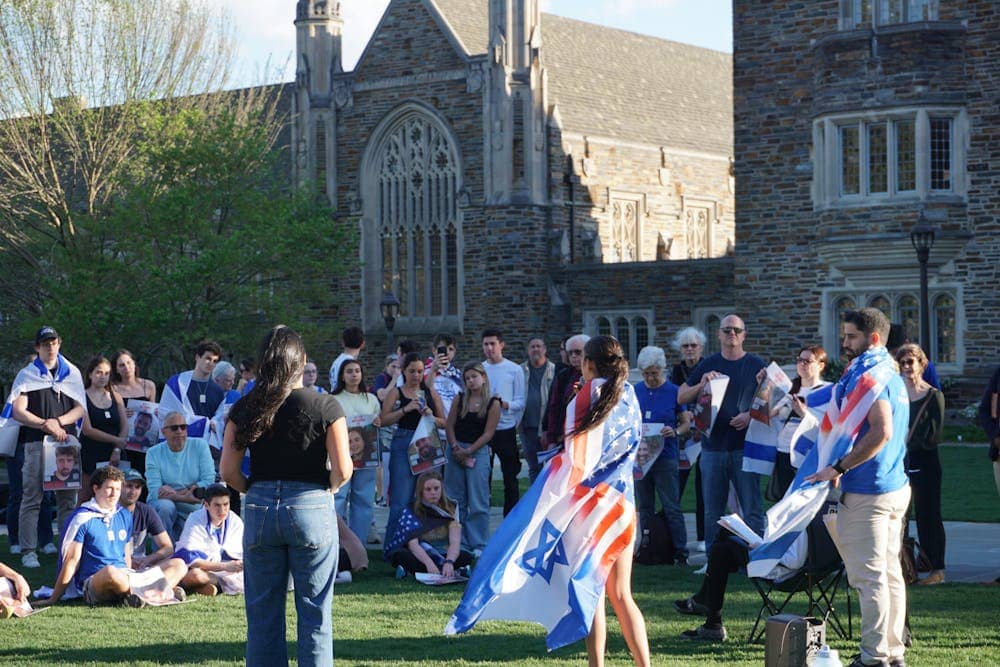
Over 50 community members gathered on Abele Quad for a “Bring Them Home” rally Wednesday calling for the release of Israeli hostages.
The event took place in front of the Duke Chapel 180 days after the initial Oct. 7 Hamas-led attack on southern Israel. Student leaders of pro-Israel organizations, religious figures from around the Triangle and family members of some of the hostages shared remarks to the crowd.
“The world stopped in Israel, and the world stopped for many Jews around the world, but life around us just kept going on,” said senior Alanna Peykar, co-president of Duke Students Supporting Israel.
The event was co-sponsored by multiple organizations at Duke and in the Triangle including Passages, Duke SSI, Club Z, Duke Friends of Israel and Chabad at Duke.
“The Duke Jewish community has stood very, very strong during one of the hardest years in our lives,” said sophomore and DFI President Sam Feldstein.
Over 50 pro-Palestinian students gathered on the other side of Abele Quad to protest the event.
According to a Thursday afternoon email to The Chronicle from Margot Cardamone, student affairs chief of staff, the demonstration was not registered with University administration and "included outside individuals who were not approved to be on campus." Cardamone added that the event is "currently under investigation."
When asked about the specific charges the event is under investigation for and the circumstances that non-registered events or outside individuals may be allowed on campus, Cardamone wrote that she could not comment further amidst an ongoing investigation.
Hostage accounts
Some Triangle residents with family members who were taken hostage on Oct. 7 spoke about their experiences.
Lucy Siegel is a Chapel Hill resident whose brother, Keith Siegel, and sister-in-law, Aviva Siegel, were kidnapped by Hamas militants from their home in Israel. Aviva was released Nov. 26. Keith is still being held hostage.
Lucy described the conditions Keith is currently being subjected to, which include “very little food, very little water, no medications, verbal abuse [and] psychological manipulation,” according to Aviva Siegel and sources within the Israeli government.
“It’s unimaginable how long it has been,” Lucy said. “As life goes on … we’re all experiencing more and more milestones in our lives. For Keith and Aviva and their four beautiful children and five grandchildren, they’re not able to celebrate milestones together.”
Lucy, who has 30 family members currently living in Israel, recounted her experience receiving live updates during the attack via their WhatsApp group chat on Oct. 7.
“Naively, I sent them a message Saturday night [Oct. 8] assuming I was going to get up the next day and there would be a message from Keith or Aviva telling me ‘we’re fine,’” Lucy said.
Lucy learned from a neighbor the following day that Keith and Aviva were kidnapped at gunpoint by Hamas militants, which was later confirmed by the Israeli government. Her family eventually learned that two of Keith’s ribs were broken and one of his hands was shot during his capture.
The Siegel family has been calling for Keith’s release since Oct. 7 and has met with several U.S. government officials, including President Joseph Biden, North Carolina Gov. Roy Cooper and multiple members of Congress.
“We will not stop until Keith is home — until all the hostages are home,” Lucy said.
Marion Robboy, who has multiple cousins being held hostage by Hamas, spoke next. She recalled celebrating the end of Sukkot — “one of the most joyful Jewish holidays” — the evening of Oct. 6. She said that early the next morning, “the world shattered.”
“Hamas terrorists were brutally killing people, raping women, killing children, destroying homes and abducting very many members of the kibbutz,” Robboy said. “In short, terrifying chaos was everywhere.”
Robboy said that 97 of the 1,000 who resided in the Be’eri kibbutz were killed in the initial attack and many were kidnapped, including seven of her cousins who Hamas held for 15 days.
“We ask ourselves how my family, your family, any family deals with such unimaginable trauma. They have no choice,” Robboy said. “They are resilient, but the pain is deep and very persistent.”
Robboy closed her remarks by calling attention to the 134 hostages who remain in Gaza.
“They need to come home now. We all need to bring them home now,” she said.
Community support
Marion’s husband Stanley Robboy, vice-chair for diagnostic pathology in the department of pathology at the School of Medicine and secretary and treasurer of Voice4Israel, spoke about the role university administrations play in combating antisemitism on campus.
He identified Voice4Israel as “an advocacy group trying to make this area safe” that works to hold the Duke and University of North Carolina at Chapel Hill administrations accountable for “the antisemitism that is in both places.”
Stanley Robboy advocated for a review of Duke’s academic departments by “legitimate outside reviewers” to assess how the University fares in addressing antisemitism, directing his remarks in particular at the department of Asian and Middle Eastern studies.
“The war in Gaza weighs heavily on many of us, and both faculty and students are experiencing heightened levels of stress and anxiety,” Shai Ginsburg, chair and director of graduate studies for the AMES department, wrote in a Wednesday evening email to The Chronicle. “I am dedicated to ensuring all voices are heard, and I am committed to listening attentively and engaging in meaningful dialogue to address any issues that may arise.”
Ginsburg extended an invitation to meet personally with any students who have concerns, encouraging “open dialogue and constructive criticism.”
Stanley Robboy also criticized POLISCI 497S, Settler Colonialism, for teaching a unit on Zionism and the Israeli-Palestinian conflict, saying that it "suggest[ed] that Jews are illegitimately occupying the land of other people."
Abdeslam Maghraoui, associate professor of the practice of political science who teaches the course, wrote in a Thursday morning email to The Chronicle that "it is absurd to claim that in a course we can’t compare 'extreme right-wing Zionism' (not Zionism tout court) to the French 'civilizing mission' in Algeria or 'apartheid' in South Africa."
"This is akin to devout Muslims on campus asking me in a different course I teach not to compare political Islam, which is nation-based, with global terrorism associated with Islamic extremism," he continued. "Of course we should. Students can write a paper arguing and demonstrating that the two are very different, similar only in some respect, only at specific moments of history, or completely dissimilar."
Maghraoui wrote that only by "studying the institutions, ideologies, the behavior of the actors and their strategies" can people understand these nuances.
“As the discourse on the Israeli-Palestinian conflict has absolutely exploded on college campuses all over the world, we’re very lucky that at Duke, the environment has been … much more calm relative to other campuses,” said Duke SSI co-president Alexandra Ahdoot, a junior.
Remarks were also given by two religious figures from the Triangle: Pastor Vince Vincent from the Calvary Chapel of Chapel Hill and Rabbi Nossen Fellig of Duke Chabad.
Vincent expressed support for his Jewish “brothers and sisters,” saying “our hearts should break for what breaks God’s heart.”
Fellig expressed his gratitude for everyone who attended the event. He spoke about “pidyon shvuyim,” the concept of redeeming captives in Jewish scripture.
“[It’s] the greatest mitzvah of all mitzvahs in the Torah,” Fellig said. “We are doing that mitzvah by being here as proud, loud, strong advocates for our people.”
Pro-Palestinian protest
While the "Bring Them Home Rally" was underway in front of Duke Chapel, pro-Palestinian students gathered on the other side of Abele Quad to protest the event.
Protesters chanted slogans such as “long live the intifada; intifada, intifada,” “ceasefire now” and “from the river to the sea.” Additional slogans included "free, free Palestine," “Jews say, ‘Ceasefire now!’” and other call-and-response phrases.
Demonstrators also accused Biden and Israeli Prime Minister Benjamin Netanyahu of “committing genocide.”
Click here to read the full article


The best way to fight Jew-hatred? Build resilient kids – Opinion piece by Masha Merkulova
The Jewish community has been in a state of disbelief and fear for nearly six months.
Jewish parents of American high school and college students have been in a state of disbelief and fear for nearly six months since Hamas terrorists murdered 1,200 people and kidnapped hundreds of people on October 7th.
If you have children in college today, you worry they will be attacked on their way to hear a Jewish speaker on campus. Or that a racist mob will force them to be locked in the university library for their safety. Or that they will be called baby killers on their way to Psych 101.
If you have children in high school, you worry that their history teacher will call Israel “Palestine” and show fake maps while distorting the history of the land. Or that the school principal will welcome a pro-Palestinian speaker at the school assembly, but not an IDF reservist. Or that your children will find a swastika carved into their desks.
Attacks on Jewish youth are happening to students at a younger age, and while some of this anti-Israel hostility occurred before the October 7th attacks, Israel’s defensive war in Gaza turned American schools and online platforms into ideological battlegrounds. As the war continues, it’s only going to get more dangerous and difficult for Jewish students.
While we can speak to administrators, sign petitions, and counterprotest, there is something more powerful that we must do to help our children deal with the reality right now: build brave, resilient, proud Jews who know who they are in a world that denies their connection to the Jewish homeland.
At Club Z, building resilient young adults is what we do.
Here are concrete actions that Jewish parents can take to build resilience in their children so they can advocate for themselves, Israel, and the Jewish people:
1. Knowledge is Power
No screaming or chanting. Jewish teens need a historically accurate, fact-based, and honest understanding of the context and history of the Jews, Israel, and the Middle East. We must then connect this history and make it relevant to the lives of teens in the US, thousands of miles away from the Levant. Teens need to understand who they are and where they come from to combat the lies and misinformation that lead to Jew-hatred. They need comprehensive knowledge rather than talking points. They need to learn how to think critically and practice this skill regularly to confidently counter the false accusations thrown at them.
2. One People, One Destiny
I’ve said this before: the struggle that our children face has little to do with Israel and everything to do with the fact that they are Jewish. Teens must know where they come from and embrace their heritage with pride and confidence. They need to understand that Judaism is inextricably connected to Zionism and the land of Israel. We are here. We are not going anywhere. We are one people with one heart and one destiny. For teens, this could mean attending a pro-Israel rally, speaking out in class, or merely changing their profile picture to an Israeli flag.
3. Jewish Pride is Jewish Activism
If knowledge is power, then activism is the superpower. Even before October 7th, we could not afford knowledge without practical application. We’ve been training teens to write op-eds, speak with clarity, and remain calm in hostile environments for years. Our children – your children and grandchildren - must have the acumen to be ready for a fight. I don’t mean a physical altercation – although self-defense is more relevant now than in the last 50 years. Rather, our kids need to be armed with the mindset to stand their ground – not only to Jew-hating professors, clueless administrators, or ignorant roommates. They also need to be able to speak up when peers, upperclassmen, and even Jewish professionals sweep real concerns under the rug and pretend that they can reason with people calling for our annihilation.
4. Strength in Numbers
Jewish teens won’t feel safe or stand up for themselves and Israel if they don’t have a community of peers supporting them. I see it daily when our teens post in our nationwide WhatsApp chat: “How can I convince my friends that Israel is not an Apartheid state?” “How do I respond to claims that Israel is committing war crimes?” Answers from other teens flood in, alongside messages of support. They trust one another, and they have each other’s backs.
5. Real-World Preparation and Experience
It’s important to give teens access to environments where they can practice resilience. While it doesn’t happen overnight, we need to set expectations for today’s youth. Too many have been told that they don’t need to do anything that makes them uncomfortable. We believe the exact opposite! Push kids to step outside their comfort zones because that’s when real change and growth happen.
Traditionally, we’ve taken Club Z teens to “Israel Apartheid” events at different universities. In addition to witnessing anti-Israel protests, teens attend lectures where they can ask questions. By asking intelligent, historically-based questions, our teens expose the lies and propaganda put forth by anti-Israel student groups. Standing up among a group of Jew-haters is scary, but with preparation, the teens rise to the challenge and break free of the “bubble wrap” in which so many of their peers are stuck.
Since October 7th, we have attended more than 20 city council meetings nationwide that are debating nonsensical ceasefire resolutions. Do we do this because we believe that a city council in Palo Alto or Durham has an impact on foreign policy? No! We do it to give our teens practice in speechwriting, distilling salient points in 90 seconds, and most importantly, delivering that speech when the opposition is shouting and booing to intimidate, frighten, and shut down their pro-Israel voices. These experiences give Jewish teens invaluable preparation for what they will encounter later in life.
As one of our parents told me, “It’s priceless for the teens to see the people from the other side up close and personal. No amount of video clips prepares them for that. For hearing the nonsense they say, and seeing the hostility they have.”
We understand that not every teenager is comfortable speaking in front of a crowd, but there are many ways to make their voices heard. Teens can write op-eds, send letters to their school administrators, post on social media, or simply talk to their friends about Israel and Judaism! That is often the most powerful impact they have.
American Jewish parents need to wake up to the harsh reality that things are going to get worse for Jewish teens before they get better. However, if we build resilience in our teens, they will have the tools to withstand and overcome this unprecedented hate and ignorance. As thousands of years of Jewish history have shown, we will prevail. We have no other option.
Masha Merkulova is the Executive Director of Club Z, an unapologetically proud Jewish Zionist space for teens to connect to each other, Jewish history, and Zionism. While spending nearly two decades in healthcare, Masha became an Israel activist in the San Francisco Bay Area, spearheading efforts to address antisemitism in high schools, Bay Area campuses, and the community at large. She has completed the Generation Now Fellowship through The Jewish Education Project, and the Israel Foreign Ministry Diplomatic Seminar for Young Jewish Leaders and served on a variety of committees related to education and advocacy work.
This op-ed is published in partnership with a coalition of organizations that fight antisemitism across the world. Read the previous article by Valeria Chazin.
Berkeley administrators, what is your response?
Click here to read the full article

As Israeli Lawyer Returns to Berkeley, University Blames Jewish Student Groups for Violence That Derailed His First Visit
Ran Bar-Yoshafat returned to Berkeley this week after initial appearance was shut down
BERKELEY, Calif.—A University of California, Berkeley, spokesman said Monday that the university could not adequately secure Israeli lawyer Ran Bar-Yoshafat’s campus appearance last month against the violent student protesters who shut down the event because Jewish student groups didn’t give officials sufficient notice.
"We found out about the event on Feb. 26, 24 hours before," Berkeley’s vice chancellor of communications Dan Mogulof told the Washington Free Beacon on Monday, as Bar-Yoshafat returned to the university to deliver his talk unhindered to a 200-person crowd. "The students didn’t tell us. They weren’t under any obligation to, but we had no idea."
This explanation comes as the university manages backlash over its handling of the anti-Semitic protest, in which assailants choked one female Jewish student trying to attend Bar-Yoshafat’s speech and spit in the face of a male student while shouting "Jew Jew Jew!" Officials moved the location of the event three times and eventually canceled the talk after the protesters broke down the doors. Last week, following days of bad press around those assaults, Berkeley announced a hate crime probe, and campus Jewish groups invited Bar-Yoshafat back to Berkeley. This time university officials hired private security guards and summoned other UC campus law enforcement to keep the peace.
Student organizers with the two campus groups behind Bar-Yoshafat’s visit, Students Supporting Israel and Tikvah, did not respond to requests for comment.
Masha Merkulova, the CEO for the pro-Israel teen educational group Club Z which organized Bar-Yoshafat’s tour, said his Feb. 26 campus appearance was announced "weeks prior" to his coming and that Berkeley’s handling of that event was inadequate.
"It’s right on brand given how they have dealt with anti-Jewish protests in the past: ‘hoping and praying’ that students will fend for themselves, which is what they have been doing for years," Merkulova said. "There has never been protection for Jewish students at UC Berkeley—until now. And even last night, private security removed the one person who decided to scream obscenities instead of asking questions."
University policy asks student groups for six weeks’ notice for "major events," such as dances, rallies, concerts, or performances, for 300 or more people. The descriptor for such an event includes a likelihood to "significantly affect campus safety and security," but Mogulof said that myriad Israeli and Palestinian speakers have come to campus since Hamas’s Oct. 7 terrorist attacks without incident.
Still, the spokesman said officials realized they had a "grave security threat" on their hands when they heard about the Feb. 26 event, but needed six weeks’ notice to hire extra police from its partner law enforcement agencies.
"We sent every available police officer we had that night, and they couldn’t do the two things we wanted police to do in that case, which was to secure the First Amendment rights of the speaker and the audience and have the event go forward, and to provide for their safety," Mogulof said. "Twenty officers and 200 people and a mob? You’ve got to pick one or the other."
For Bar-Yoshafat’s campus return, which came less than a month after his initial appearance, Berkeley administrators had less than six weeks' notice and yet officials secured the periphery around the auditorium where he was slated to speak. They also moved his speech into a building with entry and exit points that were easier to safeguard. The location of the event was not announced until two hours prior to the start. These precautions marked a change in "protocols," the spokesman said, and served as a contrast to last month’s event, when Bar-Yoshafat and his wife were hustled outside through an underground passage after the mob broke the glass doors of the venue.
Ahead of his Monday talk, Bar-Yoshafat thanked the police and security officers.
"If we lived in a better time, so much security would not be needed," he said.
Mogulof said the February assaults around Bar-Yoshafat’s initial appearance were the first instance of Israel-related campus violence since the Hamas terror attacks. Berkeley, which is home to the first chapter of pro-Hamas group Students for Justice in Palestine, has been at the forefront of anti-Israel activism. In the wake of Oct. 7, student protesters accused Israel of "playing the victim."
Monday’s presentation went smoothly, with just one female heckler standing up during the question-and-answer period to accuse Bar-Yoshafat and attendees of supporting "genocide." Outside, only a few older protesters held signs also accusing the lawyer of wanting genocide. Bar-Yoshafat has been touring the United States to address misconceptions about Israel and to answer accusations that the Jewish nation is engaging in human rights violations while trying to defeat the terrorist group Hamas.
Late last week the university’s student senate passed a resolution condemning Bar-Yoshafat’s return—claiming they wanted to "protect" Palestinian students and their allies—and demanding "guidelines" for the types of speakers allowed to come speak at Berkeley.
"They’re fostering an environment of intimidation for us—so in passing this bill they’re trying to scare us," said Sharon Knafelman, a second-year Berkeley student and vice president of Bears for Israel. "By being violent and physically assaulting us, their overall goal is to attempt to scare us into submission. But we’re not scared."
Berkeley administrators, what is your response?
Click here to read the full article
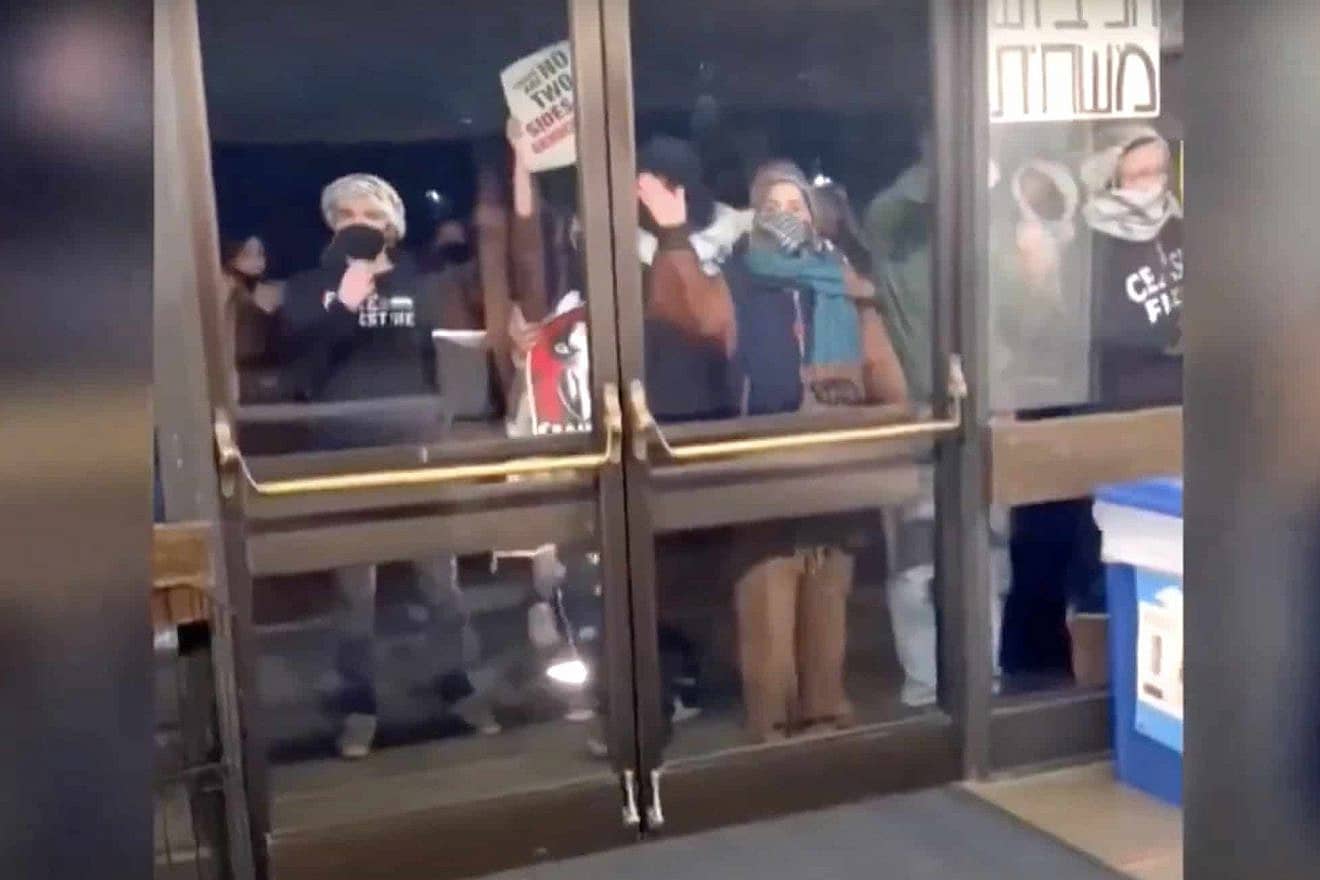
UC Berkeley’s epic failure- Opinion piece by Masha Merkulova
UC Berkeley’s epic failure
The administration refused to stop an antisemitic riot on campus.
A group of Jewish students at the University of California, Berkeley recently invited Ran Bar-Yoshafat, a reservist in the Israel Defense Forces and international policy expert, to discuss Israel’s war with Hamas in the Gaza Strip at a private campus event on Feb. 26.
We of the organization Club Z who invited him knew the local pro-Hamas student group Bears for Palestine would protest. What we did not expect was the complete and utter failure of Berkeley officials to ensure the event would be safe. Worse still, this failure came after multiple conversations with the administration and California police imploring them to be prepared for a worst-case scenario.
First, the location of the event had to be changed after Bears for Palestine posted it. The hate group also slandered Bar-Yoshafat as a “genocidal murderer” and demanded the event be shut down.
What followed was an orgy of racist violence. At the event, more than 300 protestors stormed the Zellerbach Playhouse and blocked Jewish students from entering. They called campus police “pigs”; advocated terrorism with the chant “intifada, intifada”; physically attacked Jewish students—grabbing one female student around the neck and pushing her into a wall—called them murderers; and even spat at them screaming “Dirty Jew!”
Berkeley Chief of Campus Police Yogananda Pittman canceled the event and the Jewish students were forced to evacuate under police protection. Appallingly, Bar-Yoshafat was forced to leave with no police escort and face the barbaric mob on his own.
It took UC Berkeley a week to issue a statement about the riot. The U.S. Department of Education, however, has launched an investigation. In true “we will not be silenced” fashion, Jewish campus groups are working to bring Bar-Yoshafat back to campus.
Nothing about the riot was new. In April 2016, protesters at San Francisco State University shut down an event featuring then-Jerusalem Mayor Nir Barkat. I watched administrators stand at the back of the room and do nothing. I asked them where the police were. They assured me that campus law enforcement was present and ready to intervene. This was a lie. When I finally identified a plainclothes officer, he told me that while he’d love nothing more than to remove the protestors, he had direct orders not to.
This is all the more appalling because the Berkeley riot was a blatant violation of Jewish students’ rights under Title VI of the Civil Rights Act of 1964. It is possible that lawsuits will be filed and, years from now, there will be some type of settlement.
But what are we doing now to prevent this from happening? The onus is on the Berkeley administration. Whether they like it or not, they have students on campus who are literally Hamas supporters. Those students flagrantly call for killing Jews. By shutting down the Feb. 26 event, administrators sent a clear message that such behavior will not only be allowed to continue but also rewarded.
This is a total failure of leadership. We must ask: Was Pittman unwilling to order officers to control the crowd? Will she and other administrators be held accountable for their failure? In interviews, school officials have said they were caught by surprise. Given the numerous similar incidents in recent years, this is all but impossible.
Their irresponsibility is stunning. They failed to keep their own students safe. They failed to promote diversity of thought and free speech. They failed in every way imaginable as leaders of an institution of higher learning.
Sadly, Berkeley’s failures are those of many Americans today. When our country’s core values of freedom of expression and equality are trampled by antisemitism, Americans in general must stand up and take notice—if only in their own self-interest.
Americans are delusional if they believe that Hamas is just a problem for Jews. These genocidal terrorists and their supporters mean it when they say “Death to America.” Make no mistake, the United States is next on their list. When institutions like Berkeley allow free rein to such sentiments, they are complicit in them.
Berkeley administrators, what is your response?
Click here to read the full article
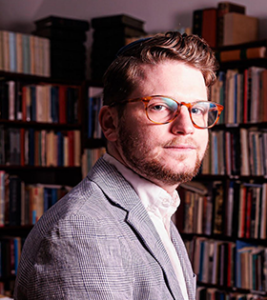 Shabbos Kestenbaum is a student activist and the lead plaintiff against Harvard University, alleging pervasive and systemic antisemitism. He is a regular contributor on national media, has testified in front of the United States Congress multiple times, and lectures internationally on Jewish communal issues.
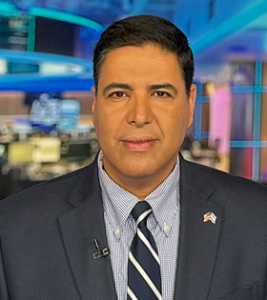 Shahar Azani is a veteran Israeli diplomat, passionate advocate for Israel and a frequent contributor to various media outlets focusing on Israel, Jewish issues and the Middle East.
 Rawan Osman is a Syrian-Lebanese/German activist advocating for peace with Israel. Rawan previously served on the executive committee at PeaceComms and as a speaker at SharakaNGO. Currently, she is studying Islamic and Jewish Studies at Heidelberg University and is the founder of ArabsAsk. Additionally, Osman serves as the Chairwoman of PostOctober7 e. V.
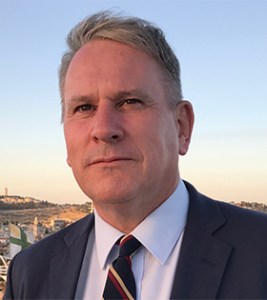 Colonel Richard Kemp was a British infantry commander who spent most of his life combating terrorism and insurgency in Iraq, Afghanistan, the Balkans and Northern Ireland, where he was wounded in a terrorist attack. His name appeared on an Al Qaida kill list in 2013.
 Dalia Ziada is an Egyptian award-winning writer, peace activist, and political analyst specializing in governance, geopolitics, and defense policy in the Middle East and the Eastern Mediterranean. She has been globally recognized for her leading role as a civil rights activist in the Arab Spring revolutions of 2010-2011 and for her uncommon stance as an Arab Muslim intellectual in support of Israel’s war against Hamas in 2023.