
Ran Bar-Yoshafat returned to Berkeley this week after initial appearance was shut down
BERKELEY, Calif.—A University of California, Berkeley, spokesman said Monday that the university could not adequately secure Israeli lawyer Ran Bar-Yoshafat’s campus appearance last month against the violent student protesters who shut down the event because Jewish student groups didn’t give officials sufficient notice.
“We found out about the event on Feb. 26, 24 hours before,” Berkeley’s vice chancellor of communications Dan Mogulof told the Washington Free Beacon on Monday, as Bar-Yoshafat returned to the university to deliver his talk unhindered to a 200-person crowd. “The students didn’t tell us. They weren’t under any obligation to, but we had no idea.”
This explanation comes as the university manages backlash over its handling of the anti-Semitic protest, in which assailants choked one female Jewish student trying to attend Bar-Yoshafat’s speech and spit in the face of a male student while shouting “Jew Jew Jew!” Officials moved the location of the event three times and eventually canceled the talk after the protesters broke down the doors. Last week, following days of bad press around those assaults, Berkeley announced a hate crime probe, and campus Jewish groups invited Bar-Yoshafat back to Berkeley. This time university officials hired private security guards and summoned other UC campus law enforcement to keep the peace.
Student organizers with the two campus groups behind Bar-Yoshafat’s visit, Students Supporting Israel and Tikvah, did not respond to requests for comment.
Masha Merkulova, the CEO for the pro-Israel teen educational group Club Z which organized Bar-Yoshafat’s tour, said his Feb. 26 campus appearance was announced “weeks prior” to his coming and that Berkeley’s handling of that event was inadequate.
“It’s right on brand given how they have dealt with anti-Jewish protests in the past: ‘hoping and praying’ that students will fend for themselves, which is what they have been doing for years,” Merkulova said. “There has never been protection for Jewish students at UC Berkeley—until now. And even last night, private security removed the one person who decided to scream obscenities instead of asking questions.”
University policy asks student groups for six weeks’ notice for “major events,” such as dances, rallies, concerts, or performances, for 300 or more people. The descriptor for such an event includes a likelihood to “significantly affect campus safety and security,” but Mogulof said that myriad Israeli and Palestinian speakers have come to campus since Hamas’s Oct. 7 terrorist attacks without incident.
Still, the spokesman said officials realized they had a “grave security threat” on their hands when they heard about the Feb. 26 event, but needed six weeks’ notice to hire extra police from its partner law enforcement agencies.
“We sent every available police officer we had that night, and they couldn’t do the two things we wanted police to do in that case, which was to secure the First Amendment rights of the speaker and the audience and have the event go forward, and to provide for their safety,” Mogulof said. “Twenty officers and 200 people and a mob? You’ve got to pick one or the other.”
For Bar-Yoshafat’s campus return, which came less than a month after his initial appearance, Berkeley administrators had less than six weeks’ notice and yet officials secured the periphery around the auditorium where he was slated to speak. They also moved his speech into a building with entry and exit points that were easier to safeguard. The location of the event was not announced until two hours prior to the start. These precautions marked a change in “protocols,” the spokesman said, and served as a contrast to last month’s event, when Bar-Yoshafat and his wife were hustled outside through an underground passage after the mob broke the glass doors of the venue.
Ahead of his Monday talk, Bar-Yoshafat thanked the police and security officers.
“If we lived in a better time, so much security would not be needed,” he said.
Mogulof said the February assaults around Bar-Yoshafat’s initial appearance were the first instance of Israel-related campus violence since the Hamas terror attacks. Berkeley, which is home to the first chapter of pro-Hamas group Students for Justice in Palestine, has been at the forefront of anti-Israel activism. In the wake of Oct. 7, student protesters accused Israel of “playing the victim.”
Monday’s presentation went smoothly, with just one female heckler standing up during the question-and-answer period to accuse Bar-Yoshafat and attendees of supporting “genocide.” Outside, only a few older protesters held signs also accusing the lawyer of wanting genocide. Bar-Yoshafat has been touring the United States to address misconceptions about Israel and to answer accusations that the Jewish nation is engaging in human rights violations while trying to defeat the terrorist group Hamas.
Late last week the university’s student senate passed a resolution condemning Bar-Yoshafat’s return—claiming they wanted to “protect” Palestinian students and their allies—and demanding “guidelines” for the types of speakers allowed to come speak at Berkeley.
“They’re fostering an environment of intimidation for us—so in passing this bill they’re trying to scare us,” said Sharon Knafelman, a second-year Berkeley student and vice president of Bears for Israel. “By being violent and physically assaulting us, their overall goal is to attempt to scare us into submission. But we’re not scared.”
Berkeley administrators, what is your response?
Click here to read the full article
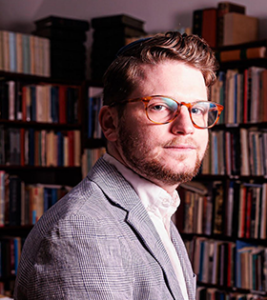 Shabbos Kestenbaum is a student activist and the lead plaintiff against Harvard University, alleging pervasive and systemic antisemitism. He is a regular contributor on national media, has testified in front of the United States Congress multiple times, and lectures internationally on Jewish communal issues.
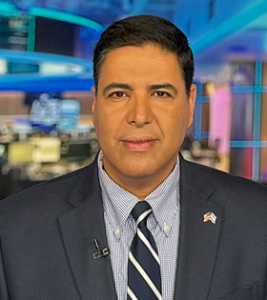 Shahar Azani is a veteran Israeli diplomat, passionate advocate for Israel and a frequent contributor to various media outlets focusing on Israel, Jewish issues and the Middle East.
 Rawan Osman is a Syrian-Lebanese/German activist advocating for peace with Israel. Rawan previously served on the executive committee at PeaceComms and as a speaker at SharakaNGO. Currently, she is studying Islamic and Jewish Studies at Heidelberg University and is the founder of ArabsAsk. Additionally, Osman serves as the Chairwoman of PostOctober7 e. V.
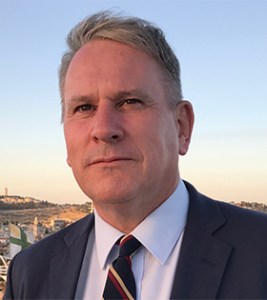 Colonel Richard Kemp was a British infantry commander who spent most of his life combating terrorism and insurgency in Iraq, Afghanistan, the Balkans and Northern Ireland, where he was wounded in a terrorist attack. His name appeared on an Al Qaida kill list in 2013.
 Dalia Ziada is an Egyptian award-winning writer, peace activist, and political analyst specializing in governance, geopolitics, and defense policy in the Middle East and the Eastern Mediterranean. She has been globally recognized for her leading role as a civil rights activist in the Arab Spring revolutions of 2010-2011 and for her uncommon stance as an Arab Muslim intellectual in support of Israel’s war against Hamas in 2023.